Cohesive Societies
- Start date
- 2017
- Departments
- Policy
- Programme status
- Ongoing
Publications
Cohesive Societies: Faith and Belief
Cohesive Societies: Scoping Concepts and Priorities
Cohesive Societies Policy Review
Cohesive Societies Literature Review

Nation on test: identity and belonging after the EU referendum

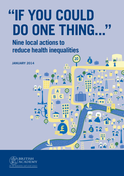
Nine local actions to reduce health inequalities

Closed projects
More about the programme
Successive governments have expressed an ambition to make society fairer, more prosperous, ‘big’, or ‘shared’. Yet there persist serious problems of inequality, deprivation, prejudice and discrimination, and various forms of social and spatial division. How then, in the UK, can we best sustain a society that is plural and cosmopolitan, prosperous, and at the same time contended and cohesive? What social systems and arrays of institutions and relationships are needed to support and include the whole population, and at what scale of organisation give strides towards regional and city devolution, at the same time as changes to the way local government is funded?
People everywhere are facing an array of changing influences, including globalisation, uncertainty over the global political, economic, demographic and climatological future. These may change the meaning of cohesion, for example by changing the importance people attach to nationality and other bases of identity, and by putting different ties, allegiances and commitment against one another.
The British Academy is drawing on our expertise and knowledge to enlighten these issues through debate, publication and research.
The programme’s exploratory phase (up to March 2019) was framed around five general themes:
- Cultural memory and tradition
How are communities shaped by people’s understanding of their historical and cultural context, the ways that they talk about these things, and the practice of traditions? - Social economy
How are communities shaped by the different ways in which people make choices, invest their energy, and make exchanges of all sorts involving skills, space, knowledge, networks, technologies and physical resources? - Meaning and mechanisms of social responsibility
How much can social responsibility be supported by informal co-operative commitments and obligations, and how much does it require more formal structures like legislation? - Identity and belonging
How do people define and defend their identities, and their identities with others? How do people context one another’s identities? - Care for the future
How should we think about the sustainability of society in the face of significant shifts like climate change and demographic change? In this context, how should we consider the nature of obligations across generations?
The programme is led by a working group of Fellows
Professor Dominic Abrams FBA, Vice-President (Social Sciences), Co-chair; Professor Mary Morgan FBA, Co-chair; Professor Ash Amin FBA, Foreign Secretary; Right Hon Sir Jack Beatson FBA; Professor Alan Bowman FBA; Professor Wendy Davies FBA; Professor Tariq Modood FBA; Professor Henrietta Moore FBA; Professor Genevra Richardson FBA, Vice-President (Public Policy); Professor Peter Taylor-Gooby FBA; Professor Greg Woolf FBA
Policy and Research: [email protected]
Senior Policy Adviser: Anna Bradshaw: [email protected]
Tel: 0207 969 5215