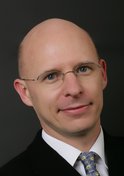
Professor Michael Posner FBA

- Fellow type
- International Fellow
- Year elected
- 2014
- Subjects
- Psychology
- Sections
- Psychology
Summary
For more than fifty years Michael Posner has studied how mental operations, particularly those related to attention, are carried out by neural networks. He has used cognitive, imaging and genetic methods. He continues these studies as Prof. Emeritus of Psychology at the University of Oregon and Adjunct Prof. at Weill Medical College. His current work examine the mechanisms of changes in white matter resulting from various forms of training. A mouse model together with optogenetic methods is used to examine the general changes with learning and the reason for individual differences in changed connectivity. We are currently testing if individual differences in methylation efficiency can account for the differences in the degree of change in white matter that occur with learning and development.
Current post
Professor of Psychology Emeritus, University of Oregon; Adjunct Professor, Weill Medical College, New York
Publications
Other Fellows of the British Academy
Professor Núria Sebastián Gallés FBA
Learning and language processing with a special emphasis on bilinguals. Research extends from infants to adults with methodologies that are based on behavioural, physiological and brain imaging responses
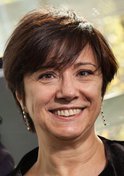
Professor Michael Billig FBA
Nationalism; far-right; rhetoric and thinking; psycho-analysis and repression; history of psychology; academic writing; psychology and humour; theory and examples in psychology; history of rock’n’roll
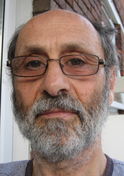
Professor Stanislas Dehaene FBA
Experimental psychology and cognitive neuroscience of human higher cognitive functions: language, reading, mathematics; brain mechanisms of conscious versus non-conscious processing