Professor Eleanor Dickey FBA

- Fellow type
- UK Fellow
- Year elected
- 2014
- Subjects
- Classics, Education, Linguistics
- Sections
- Classical Antiquity , Linguistics and Philology , Education
Current post
University of Reading Professor of Classics
Publications
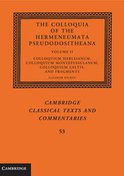
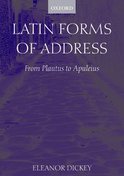
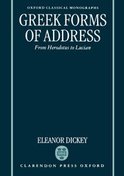
The Colloquia of the Hermeneumata Pseudodositheana I and II
Eleaonor Dickey - Published in 2012-15 by Cambridge University Press
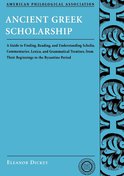
Ancient Greek Scholarship: A Guide to Finding, Reading, and Understanding Scholia, Commentaries, Lexica, and Grammatical Treatises
Eleanor Dickey - Published in 2007 by Oxford University Press
Other Fellows of the British Academy

Professor Robin Osborne FBA
Classics and Ancient History History Art and Archaeology of Greece and the Greek World History of Greece and the Greek World Southern Europe Greece
Professor Gloria Ladson-Billings FBA
Investigation of the cultural foundations of teaching and learning that leads to educational improvement for students who are most marginalised in schools; critical race theory applications to education