What can histories of Empire teach us about modern environmental efforts?
By Professor Sadiah Qureshi
16 Dec 2025
This blog is part of Living with the Planet season at the British Academy.
In the lead up to the United Nations Biodiversity Conference 2022 – or COP 15 – the United Nations launched a marketing campaign featuring Frankie the dinosaur. Advertisements showed Frankie gate-crashing the summit to plead with humanity with the tagline ‘Don’t Choose Extinction’.
Delegates at COP 15 wishing to avoid extinction adopted the Global Biodiversity Framework – or ‘30 by 30’ plan – which committed to protecting 30 per cent of the planet by 2030. Around 17 per cent of the world’s terrestrial habitats and 10 per cent of its marine areas are already under protection.
The most likely scenario is that current wildlife reserves will be expanded alongside new areas receiving protection. The ‘30 by 30’ plan is an important effort to address the destruction of irreplaceable ancient ecosystems and related species decline that underpins our current biodiversity loss and climate crisis.
Native dispossession and the foundation of national parks
Although ambitious, even grander schemes have been proposed.
The late ecologist E. O. Wilson (1929-2021) dreamed of dedicating half our planet to wildlife recovery. Around 250 million people are believed to live in protected areas. One team of scientists estimates that implementing Wilson's dream would mean that over a billion people might be directly affected and, crucially, that already marginalised communities would face a disproportionate impact.
Although not inherently opposed, nature conservation and human settlement are often pitted against each other as if in a zero-sum game due to much older histories of extinction and empire.
After the American Revolutionary War (1775–83), westward European expansion led by the newly independent American colonies gathered pace. Many leaders of the new republic predicted that Native nations were on the verge of extinction from contact with colonists.
In President Andrew Jackson’s first Annual Message to Congress in December 1829, he claimed that certain extinction would follow if Eastern Native Nations were not removed to a dedicated territory in the west. Within six months, the United States passed the Indian Removal Act of 1830 and began the forced removal of peoples east of the Mississippi River to the west. More than 50,000 people from at least 18 Native nations were marched to a new Indian Territory. Thousands died along the way from malnourishment and disease.

In the wake of removal, the young Pennsylvanian artist George Catlin was so convinced of the imminent extinction of Native nations that he dedicated himself to publicising their plight. He made five treks west of the Mississippi in the summers from 1830 and 1836 and diligently painted the continent’s landscapes and peoples while collecting an enormous range of artefacts.
Catlin was so captivated by the peoples he met that he imagined a future when they would be:
''(…)preserved in their pristine beauty and wildness, in a magnificent park, where the world could see for ages to come, the native Indian in his classic attire, galloping with his wild horse, with sinewy bow, and shield and lance, amid the fleeting herds of elks and buffaloes. What a beautiful and thrilling specimen for America to preserve and hold up to the view of her refined citizens and the world, in future ages! A nation's Park, containing man and beast, in all the wild and freshness of their nature's beauty!''
Catlin’s imagined park was intended to protect Native nations and their ways of life from extinction, but the eventual reality was very different. National parks were originally established as spectacular sites for the enjoyment of tourists, not for the benefit of native nations or wildlife.
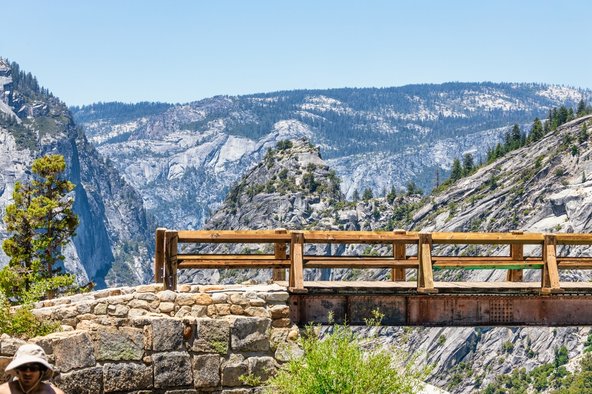
Early campaigners routinely claimed the parks were national monuments of unmatched splendour, but also agriculturally or commercially worthless. Powerful corporations, such as railway companies, supported the movement in the hopes of creating an internal tourist industry.
California established Yosemite as the first state park in 1864, and Yellowstone soon followed as the world’s first national park in 1872. As parks were carved out from Native lands, campaigners insisted parks must be emptied of people to allow tourists to enjoy the landscapes without fear.
The establishment of North American national parks created a new strategy for state-sanctioned dispossession that was quickly adopted by conservationists worldwide. As countries across the world set up national parks, they copied the North American model of confiscating homelands and removing Indigenous people to maintain pristine wilderness areas. This included parks in Canada (1887), Australia (1879, 1891, and 1915), New Zealand (1894) and South Africa (1926).
Globally, the national parks movement entrenched forms of wilderness and conservation rooted in Indigenous dispossession. The American model proved immensely powerful as preservationists who favoured maintaining ostensibly untouched wilderness clashed for decades with conservationists who sought to actively manage protected landscapes for human use.
Early efforts for safeguarding wildlife
National parks were only associated with wildlife protection in the later 19th century as naturalists raised alarm about vanishing species. Populations of North American bison plummeted from an estimated 30 million in 1800 to fewer than a hundred before the end of the century. By the 1880s, Yellowstone National Park was the bison's last sanctuary.
The naturalist William Temple Hornaday penned numerous publications about the bleak prospects facing wildlife, including ‘The Extermination of the Bison’ (1889) and ‘Our Vanishing Wildlife’ (1913). A hunter turned penitent protector, Hornaday started breeding bison in a desperate attempt to stop their extinction. Bison were pulled back from the brink of extinction in a period when vanishing species were seldom protected, even when their rarity was widely acknowledged. Their rescue proved enormously important for the modern environmental movement.
The current biodiversity crisis is an unnatural extinction of our making and the result of the damage being wrought by exploitative and unchecked consumption. Although it would be understandable to feel despondent or panic, we must think carefully about how we respond.
Instead of asking Indigenous peoples to sacrifice even more to solve a crisis not of their making, we must demand that nations and corporations that have contributed the most to our current predicament, whether through using fossil fuels or destroying natural habitats, bear the responsibility. Doing so might finally help undo some of the harm caused to so many peoples worldwide, while also securing a truly just future for life on earth.
Professor Sadiah Qureshi is a Chair in Modern British History at the University of Manchester. She recently won the Royal Society’s Wilkins-Bernal-Medawar Medal. Her latest book, 'Vanished: An Unnatural History of Extinction' (2025), examines the entangled histories of extinction and empire.
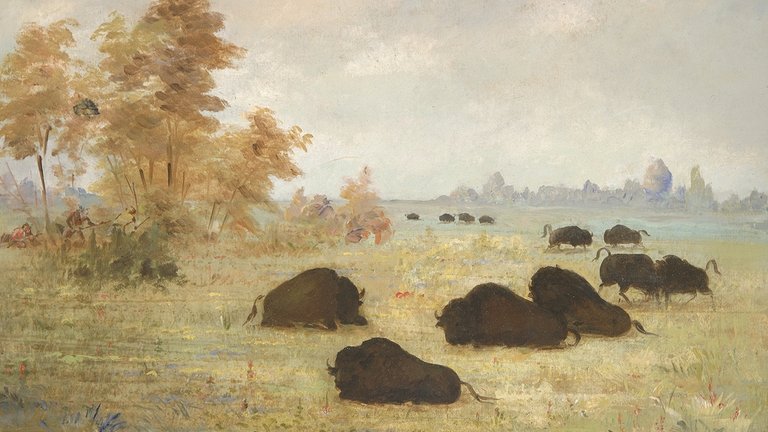
Image credit: George Catlin 'Stalking Buffalo, Arkansas', 1846-1848, oil on canvas via Shutterstock.