Transcript
We are a very wasteful society. The world's population has just breached the eight billion mark. This is creating a crisis of unsustainability. Can we continue to advance technologically as well as achieve economic growth without endangering planet Earth? How can the past help us?
As an archaeological scientist, I draw from different disciplinary techniques to study technology and its history, and how it influenced the development of societies of different time periods from the past to the present.
We are very fortunate that in archaeology, we deal with societies of different time periods which have accumulated different sets of experiences. But maybe the main issue we face is about world views, or cosmologies. By this, I mean how we think about the world, our ideas, our beliefs, and how we think also about the relationship between the heavens and earth. If we are to zoom into the present, we can identify two worldviews.
One of them is that we need to use big technology to achieve economic growth, and unfortunately, the combination of big technology and economic growth often negatively impacts the health of the planet. Part of the same worldview also says that we need to scale back on big technology, and maybe we need also to scale back on our emphasis on growth. Perhaps we should think about other ways to ensure that we meet our needs without endangering the sustainability of the planet and without endangering it for the future generations. Is this even possible?
Let's go to the 19th century, particularly the end of that century. We realise that this is the beginning of industrialisation, the rise of science and technology as we know it in the modern world, as well as colonialism, and this expansion to other parts of the world. We see this cosmology developing where there is a separation between nature and culture. We see that technology, a result of a cosmology, is believed to be in the service of us as human beings. So, we must exploit the planet for our own benefit and for our own comfort. If you increase the scale, then that creates the problems of sustainability that we have today.
However, what we learn from archaeology and archaeological science is that there are other alternative worldviews that very successful civilisations that existed before us used, and with some remarkable degrees of success.
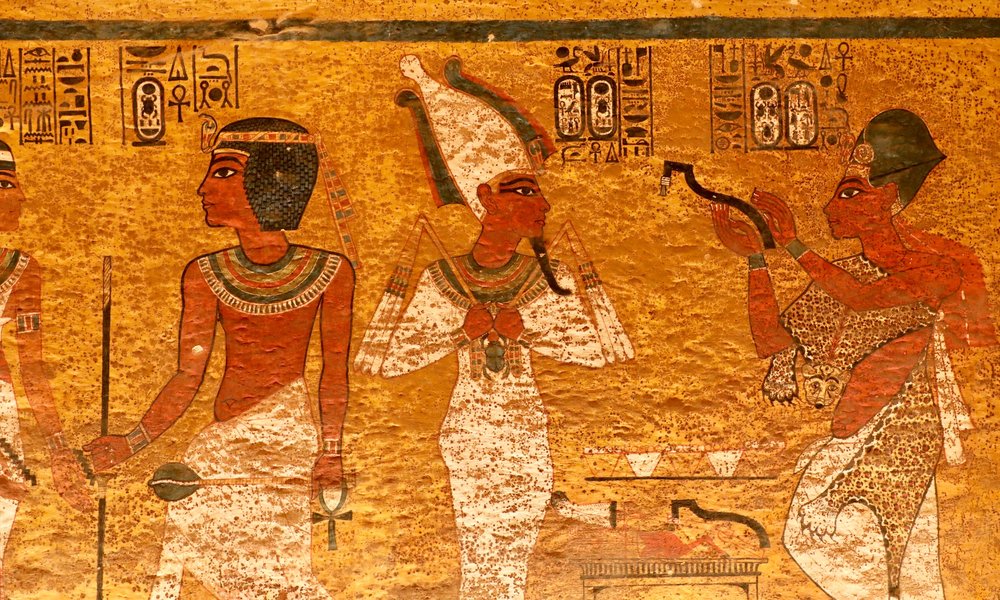
Let's go to Ancient Egypt, for example, which is one of those successful civilisations that developed along the Nile River. To the Ancient Egyptians, the Nile was not just a water course. It was a source of life. It was inbuilt into the cosmology of the Ancient Egyptians. There are gods and goddesses that were conceptualised to ensure the sanctity of the Nile River and indeed, the ecological balance and the sustainability of Ancient Egypt. It was not just development for development's sake.

We can also go to the southern part of the African continent and talk about the sophisticated civilisation that developed and flourished in Great Zimbabwe. It had a vibrant economic base dominated by production, engineering, and localised, regional and long-distance trade with North Africa, India, and the Far East.
Sustainability was inbuilt into Great Zimbabwe. The result was that the civilisation thrived for at least 600 years without any ecological disaster.

Again, one of the main reasons for this success was a cosmology that respected the planet, that respected the Earth and that respected the sustainability that we are going to leave for future generations.
There are plenty of other examples of these cosmologies. For example, in the Amazon in Brazil, as well as amongst the Maya people, these tell us that it is possible for societies to develop economically, to be advanced technologically, but also with good sense of stewardship to the environment.
The world's population will continue to increase. We will continue to need economic growth, and we will continue to need technology.
Is it naive, therefore, to think that the world views that worked for other groups, such as the Egyptians and for Great Zimbabwe, can work in the changed circumstances of the present? I don't think so. I think that we need a mindset shift, and that we can learn from these other cosmologies to change some of our mindsets, so that we can achieve both the needs of the present and future generations without endangering the health of planet Earth and without compromising the sustainability of generations that will come after us.
Shadreck Chirikure is Edward Hall Professor of Archaelogical Science at the University of Oxford.
Credit for preview image: Ancient Temple in Egypt. Credit: AXP Photography.
Subscribe to this podcast via your chosen service
This talk is part of the series The British Academy 10-Minute Talks, where the world’s leading professors explain the latest thinking in the humanities and social sciences in just 10 minutes.