Tutankhamun is perhaps one of the world’s most famous pharaohs. He is known primarily for having the only virtually intact tomb discovered in the Valley of the Kings, and most of the time, people think about the gold, the jewels, the statues, and the furniture. What often gets overlooked, though, are the items of daily life that the tomb contained. Amongst those was food.
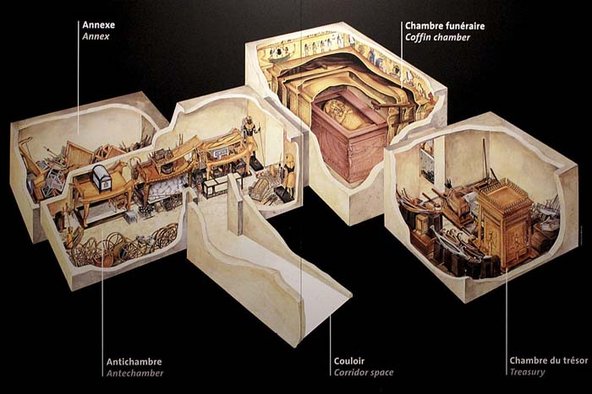
Tutankhamun was a growing teenage boy, and as a growing teenage boy, he really did want to eat well, both in this life and the next, because food is one of life's chief pleasures, and his tomb contained a huge amount of food. It was stored in wonderful boxes that are little coffins in the shapes of what they contain, and what they contained was the meat and poultry that the king could snack on. It was all prepared, cut and salted and cooked and seasoned, ready for eating. It’s a bit like grabbing a ready to eat chicken from the supermarket today.
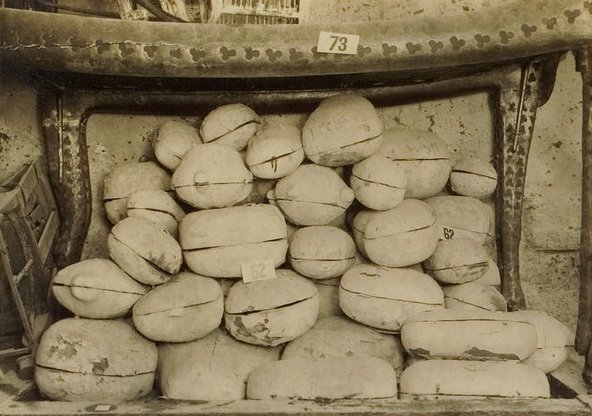
Tutankhamun had his food well prepared in these boxes. It was wrapped up, mummified, and consisted primarily of beef—the highest status meat. He also had poultry: ducks, geese, and pigeons. But no chickens - those weren’t in Ancient Egypt.
What’s fascinating is that we have examples of these food boxes, given to royalty or the elite, dating back to about 1550–1600 BC. The boxes are white on the outside, and inside they’re covered with a black substance. The technical term Egyptologists use is “black goo”—because until it’s tested, we don’t know exactly what it is. So, it’s probably better to call it that, rather than bitumen or pitch, as it has been named in the past.
When we analysed this black goo from some of the boxes, we found it was an extraordinary mixture of terebinth resin, oils, and a little wax - the same things used for mummies. It helped preserve the food, keeping away insects and bacteria, but it was also a flavouring. Even today, resin is used in Middle Eastern cooking. So, this recipe has continued for thousands of years, until today. It was not just a practical sort of thing, but it was also something that was given for flavouring in recipes from antiquity.
For the Ancient Egyptians, the best meat was beef. That was the top tier. They ate sheep and goat too, but you don’t find those in Tutankhamun’s tomb—perhaps because they weren’t high–status enough, or maybe he just didn’t like them.
The Egyptians also ate fish as well as pigs, but again, those don't appear in the tomb, primarily because they're easy to get, a lower–class food, or maybe it's a matter of taste.
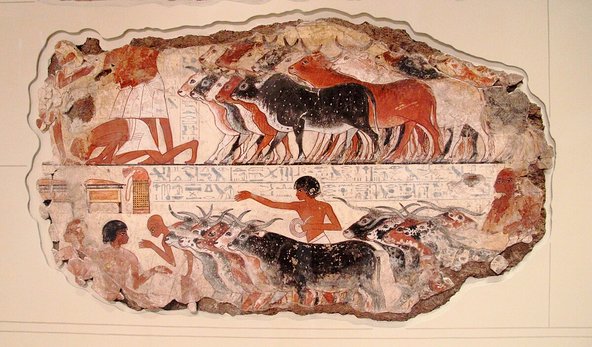
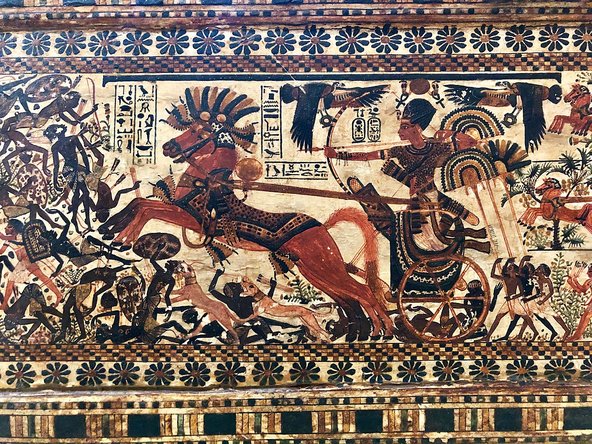
The tomb did contain lots of archery equipment, and we also have images of the king hunting wild animals. Kings (and gods) enjoyed their hunted food—gazelle, hartebeest, oryx, ibex, Barbary sheep, and the like. Tutankhamun is shown hunting them, and we have his bows and arrows. But none of that meat appears in the tomb. The idea seems to be that in the afterlife, should he wish to hunt, he could. By Tutankhamun’s time, hunting was less about food and more an elite sport. That’s why you don’t see it much outside royal or temple contexts.
In addition to the bows and arrows, the tomb also contained something that looked like a matchbox: a fire starter. It was a piece of wood with holes in it, designed to create friction and ignite. Tutankhamun was, in a way, like a well-prepared Boy Scout, ready for every eventuality in the afterlife.
Tutankhamun’s food would have been flavoured with different herbs and spices, many of which were found in the tomb. Coriander, nigella, thyme, fenugreek (used both as medicine and seasoning), garlic, and onions. Onions, in fact, were a staple of the Egyptian diet, whether you were a king or a commoner, alongside beer. The pyramids, they said, were built on bread, beer, and onions. Tutankhamun’s tomb contained the onions, but curiously, no beer. Perhaps he just didn’t like it.
We do have barley and emmer wheat, represented by a gorgeous model granary. People often imagine Ancient Egyptian grain could still sprout today, but like any seed, it has a sell-by date. Believe me, we’ve tried.
We have a little grinding stone too. He likely never imagined doing that kind of manual labour in the afterlife, but it was there just in case. It would have been used to grind the flour for the cakes and the breads found in his tomb.
And he didn’t just have wheat flour cakes and breads, but he also had some with nabk berries, flavoured with dates and honey, making them very sweet.
As I mentioned, he didn’t drink beer, or at least there was no beer in his tomb, but he did like his wine, so we have a lot of wine jars. We even have grapes, or rather, raisins by now. The wine jars are wonderful because they’re labelled with the place of origin, the vintner, the year, and even a quality mark: good, very good, or very, very good. There was even wine “to make you merry.”
That’s probably why Tutankhamun also had little sieves. They’re special wine sieves because, of course, there’s a lot of stuff still floating around in the wine, and so this was to make sure that his wine, even the one to make him merry, was nicely sieved and went down smoothly.
What’s also quite interesting is that we know from tests carried out that there was red wine as well as white wine. Red wine was placed on one side of the burial chamber and the white on the other. And this is because the king is identified with the Sun God, so he rises in the east with the sun, and this is where you have the white wine, which is the white morning sun. The red wine is the sun at sunset. So, this is the whole cycle of rebirth and resurrection that you see encapsulated by the wines.
He, of course, had fruits that could be eaten or used as flavouring or turned into drinks such as dates and doum palm. While the tomb did not contain pomegranates, there were examples of silver ones, so clearly that was in there. And we have nabk berries and almonds, which would have been introduced into Egypt in about 1500 BC, if not before.
Juniper berries, sycamore figs grewia tenax (also known as falsa), Persia nuts, and watermelon were also there. We don’t have the actual melons, of course, but we do have the seeds, still eaten today as snacks. It’s fascinating that they turned up in the tomb, since you wouldn’t necessarily expect them in a royal burial.
Other tombs have offering lists in their tomb, but Tutankhamun did not, because he didn't need it, because he in fact, had all of the actual objects, all the actual food in his tomb, so that he could eat it in the afterlife.
What is wonderful for us is that this provides an insight, not only into royal diet, but also to what was there in the environment, what might have been imported, and gives us a real insight into the flora and fauna, as well as the eating habits of the Ancient Egyptians.
Salima Ikram is a Professor of Egyptology at the American University in Cairo.
Subscribe to this podcast via your chosen service
This talk is part of the series The British Academy 10-Minute Talks, where the world’s leading professors explain the latest thinking in the humanities and social sciences in just 10 minutes.