Professor Zoltán Dienes FBA
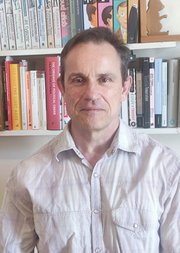
- Fellow type
- UK Fellow
- Year elected
- 2026
- Subjects
- Psychology
- Sections
- Psychology
- Website
- University of Sussex
Summary
Zoltán Dienes studied BA Natural Sciences at Cambridge (1984), MA experimental psychology at Macquarie University (1987), and D.Phil experimental psychology at Oxford (1990). He has been working at the University of Sussex ever since. Half of his work as been on scientific reform. He explored the interface between science and statistics so that evidence for an effect not being there can be scientifically justified.
He was on the first editorial board for Registered Reports, where papers are accepted or rejected before the results are in to mitigate publishing bias; and was a co-founder of Peer Community In Registered Reports, producing papers free for readers and authors. He does not author, review, nor edit for journals published by for-profits except for society journals. He introduced the first reproducibility statistician in a psychology department, that is, an independent statistician who checks all results before a paper is submitted. He has argued universities should be governed by an open democracy not by separate managers.
The other half of his work is in consciousness science. He developed neural network models of implicit (i.e. intuitive) learning (of structure in, for example, artificial languages, music or poetry) and methods for measuring unconscious vs conscious knowledge according to the subjective experience each elicits. He developed the notion of phenomenological control, a trait ability to construct compelling experiences that misrepresent reality in order to satisfy goals, as may happen in hypnotic response, some religious experiences, or the psychologist’s lab. The trait is postulated to be an evolved ability to strategically deceive oneself by intending to imagine, pretend or act while being unaware of the intention so that a compelling experience is produced. For example, intending the arm to lift but being unaware of that intention makes the arm lift as if by itself or by another agency.