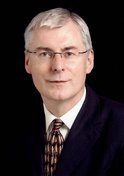
Professor Susan Fiske FBA

Social cognition, especially cognitive stereotypes & emotional prejudices, at cultural, interpersonal & neuroscientific levels; reactions to social comparison, status, social class, gender, ethnicity, immigrants
Fellow type
International Fellow
Year elected
2011
Subjects
Psychology
Sections
Psychology

Summary

Susan T. Fiske (Harvard University PhD; honorary doctorates: Universite catholique de Louvain-la-neuve, Universiteit Leiden, Universitet Basel) investigates social cognition, especially cognitive stereotypes and emotional prejudices, at cultural, interpersonal, and neuro-scientific levels. Author of over 300 publications and winner of numerous scientific awards, she has been elected to the National Academy of Sciences. Sponsored by a Guggenheim, her 2011 Russell-Sage-Foundation book is Envy Up, Scorn Down: How Status Divides Us. Her most recent book is The HUMAN Brand: How We Respond to People, Products, and Companies (with Chris Malone). With Shelley Taylor, she wrote four editions of a classic graduate text: Social Cognition, and on her own, three editions of an advanced undergraduate text, Social Beings: Core Motives in Social Psychology. She has lately edited Social Neuroscience, Beyond Common Sense: Psychological Science in the Courtroom, the Handbook of Social Psychology, the Sage Handbook of Social Cognition, and Facing Social Class: How Societal Rank Influences Interaction. She currently edits for Annual Review of Psychology, PNAS, and Policy Insights from Behavioral and Brain Sciences. Her graduate students arranged for her to win the University's Mentoring Award; international advisees arranged for her to win the Mentoring Award from the Association for Psychological Science.

Current post

Eugene Higgins Professor of Psychology and Professor of Psychology and Public Affairs, Princeton University

Publications

Social cognition: From brains to culture 2013; 2/e

A model of (often mixed) stereotype content: Competence and warmth respectively follow from perceived status and competition. Journal of Personality and Social Psychology, 82, 878-902. 2002

Stereotyping, prejudice, and discrimination at the seam between the centuries: Evolution, culture, mind, and brain. European Journal of Social Psychology, 30, 299-322. 2000

Controlling other people: The impact of power on stereotyping. American Psychologist, 48, 621-628. 1993

Universal dimensions of social perception: Warmth and competence. Universal dimensions of Trends in Cognitive Science, 11, 77-83. 2007

The Ambivalent Sexism Inventory: Differentiating hostile and benevolent sexism. Journal of Personality and Social Psychology, 70, 491-512. 1996

Other Fellows of the British Academy

Professor Hazel Rose Markus FBA

Social and cultural psychology; how sociocultural contexts (e.g. nation, race, ethnicity, gender, social class, occupation) shape thought, feeling and action; culture change; bridging research and practice to reduce disparities and culture clashes

Hazel-Rose-Markus-FBA.jpg

Professor Charles Nelson III FBA

Development and neural bases of processing social information (eg facial emotion); trajectories to autism, with a particular focus on populations at high risk for developing autism (eg, infants with an older sibling with autism; children with various single gene mutations that appear to confer risk for developing autism); effects of early adversity on brain and behavioral development, including exposure to both psychosocial adversities and biological adversities

Charles-Nelson-FBA.jpg

Professor Peter Hagoort FBA

Peter Hagoort is emeritus director of the Max Planck Institute for Psycholinguistics and the emeritus founding director of the Donders Institute, Centre for Cognitive Neuroimaging (DCCN, 1999), a cognitive neuroscience research centre at the Radboud University Nijmegen.

Peter-Hagoort-FBA

Sign up to our email newsletters

Join our mailing list to explore the ideas and impact of the British Academy. Get updates on research, funding, policy, international collaborations, and events that bring the humanities and social sciences to life.