Dr Richard Duncan-Jones FBA

- Fellow type
- UK Emeritus Fellow
- Year elected
- 1992
- Year of death
- 2024
- Subjects
- Classics
- Sections
- Classical Antiquity
Summary
Dr Richard Duncan-Jones was educated at King Edward's School, Birmingham and at King's College, Cambridge. He is a Fellow of Gonville and Caius College, Cambridge. He has also been a Member of the Institute of Advanced Study at Princeton. He has published widely on Roman social and economic history. His books published by the Cambridge University Press are: The Economy of the Roman Empire (2nd edition, 1982), Structure and Scale in the Roman Economy (1990), and Money and Government in the Roman Empire (1994). He has been a Fellow of the British Academy since 1992. He was Chairman of Section H1 from 1997 to 2000.
Last post
Gonville & Caius College, Cambridge Fellow
Publications
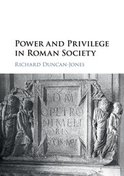
Power and Privilege in Roman Society
Richard Duncan-Jones - Published in 2016 by Cambridge University Press
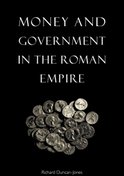
Money and government in the Roman Empire
Richard Duncan-Jones - Published in 1994 by Cambridge University Press
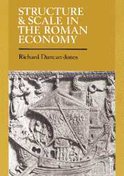
Structure and scale in the Roman economy
Richard Duncan-Jones - Published in 1990 by Cambridge University Press
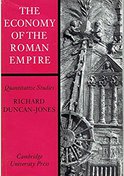
The economy of the Roman Empire: Quantitative Studies
Richard Duncan Jones - Published in 1974 by Cambridge University Press
Other Fellows of the British Academy
Professor David Langslow FBA
Latin, Greek and Indo-European languages and their descriptive, historical and social linguistics; ancient special and technical varieties, especially as reflected in the translation and transmission of ancient medical texts

Professor Kathleen Coleman FBA
Latin literature of the Flavian and Trajanic periods; Roman social history, especially spectacle and punishment

Professor Pierre Briant FBA
History, culture and societies in the Ancient Near East, during the Achaemenid period and the period of Alexander's conquests