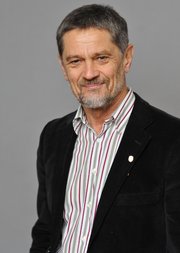
Professor Josef Perner FBA
- Fellow type
- International Fellow
- Year elected
- 2001
- Subjects
- Psychology
- Sections
- Psychology
Summary
JOSEF PERNER received his PhD in Psychology from the University of Toronto. He was Professor in Experimental Psychology at the University of Sussex and is now Professor of Psychology and member of the Centre for Neurocognitive Research at the University of Salzburg. He is author of "Understanding the Representational Mind" (MIT Press, 1991) and over 180 articles on cognitive development (theory of mind, executive control, episodic memory, logical reasoning), consciousness (perception versus action), simulation in decision making, and theoretical issues of mental representation and consciousness. He served as President of the European Society for Philosophy and Psychology, is a Fellow of the British Academy, the Academia Europaea, the Leopoldina, the Center for Advanced Studies in the Behavioral Sciences at Stanford, the Association for Psychological Sciences, holds an honorary doctorate from the University of Basel, and was awarded the William Thierry Preyer Award for Excellence in Research on Human Development by the European Society of Developmental Psychology (ESDP) and the Bielefelder Wissenschaftspreis for the interdisciplinary nature of his research.
Current post
Professor of Psychology, University of Salzburg
Publications
Other Fellows of the British Academy
Professor Sophie Scott FBA
Neurobiology of the human voice, including perception, production, as well as emotional expressions such as laughter

Professor Richard Bentall FBA
Social determinants and psychological mechanisms leading to symptoms of severe mental illness (hallucinations, delusions); novel psychological treatments for people diagnosed with schizophrenia, bipolar disorder and other serious psychiatric disorders

Professor Martin Eimer FBA
Cognitive and neural mechanisms of visual attention and working memory; Integration of attention across sensory modalities; Face perception and recognition and their impairment in prosopagnosia