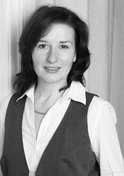
Professor John Duncan FBA
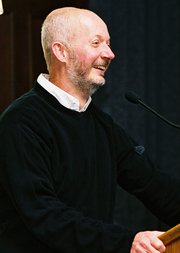
- Fellow type
- UK Fellow
- Year elected
- 2009
- Subjects
- Psychology
- Sections
- Psychology
Summary
Following undergraduate and doctoral work at the University of Oxford (1970-1976), and a two year postdoc at the University of Oregon, John Duncan took up a research position with the Medical Research Council where he has remained ever since. He now holds joint appointments as Programme Leader at the MRC Cognition and Brain Sciences Unit in Cambridge, and Professorial Research Fellow in the Department of Experimental Psychology, University of Oxford. His work combines cognitive psychology, neuropsychology, neuroimaging, and single cell physiology, addressing problems of attention, intelligence and cognitive control. One programme, for example, concerns the widespread disorganization of thought and behaviour that can follow damage to the frontal lobes. Another uses single cell recording to ask how behaviour is controlled through the dynamic activity of large neural networks. A third relates frontal lobe functions to human reasoning, abstraction and intelligence. Much of this work is summarized in the popular science book How intelligence happens (2010). John Duncan is a Fellow of the Royal Society (2008) and of the British Academy (2009).
Current post
Programme Leader, MRC Cognition and Brain Sciences Unit, Cambridge
Publications
Other Fellows of the British Academy
Professor Robert Ladd FBA
Phonology and phonetics, and the relation between them ("laboratory phonology"); intonation and prosody, including focus, emotion, pitch perception, tone languages, and links between language and music
Professor Anne Cutler FBA
The perception of speech, including its development across infancy; in particular how speech perception processes are shaped by language experience
Professor Cecilia Heyes FBA
Experimental and theoretical psychology: evolutionary, developmental and cultural origins of cognitive processes; animal cognition; social cognition; social learning; imitation