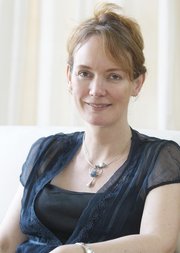
Professor Francesca Happé FBA
- Fellow type
- UK Fellow
- Year elected
- 2014
- Subjects
- Psychology
- Sections
- Psychology
Summary
Francesca Happé is Professor of Cognitive Neuroscience and Director of the MRC Social, Genetic & Developmental Psychiatry Centre at the Institute of Psychiatry, Psychology & Neuroscience, King's College London. She completed her undergraduate degree in Experimental Psychology at Oxford University and her PhD at UCL/MRC Cognitive Development Unit, supervised by Professor Uta Frith. Her research focuses on autism spectrum conditions. She has explored the nature of social understanding in typical development and 'mind-reading' difficulties in autism. She is also actively engaged in studies of abilities and assets in people with autism, and their relation to detail-focused cognitive style. As well as cognitive methods, her research has involved functional imaging studies, exploration of acquired brain lesions, and behaviour genetic analysis. Most recently she has begun studies of under-researched groups including ageing in autism, women with autism, agenesis of the corpus callosum, and children with extreme demand avoidance. She is the author of more than 180 research papers and a book on autism for general readers. She has received the British Psychological Society Spearman Medal, the Experimental Psychology Society Prize, and the Royal Society Rosalind Franklin Award, and was President of the International Society for Autism Research (INSAR) from 2013-2015.
Current post
Genetic and Developmental Psychiatry Centre, Institute of Psychiatry, Psychology and Neuroscience, King's College London Professor of Cognitive Neuroscience, Director of MRC Social and Head of Department
Other Fellows of the British Academy
Professor Núria Sebastián Gallés FBA
Learning and language processing with a special emphasis on bilinguals. Research extends from infants to adults with methodologies that are based on behavioural, physiological and brain imaging responses
Dr Joshua Tenenbaum FBA
Joshua Tenenbaum's research focuses on computational models of human cognition, its development and its neural basis, and using these models as the foundation for new kinds of artificial intelligence that are more efficient, general, understandable, safe and pro-human.

Professor Martin Eimer FBA
Cognitive and neural mechanisms of visual attention and working memory; Integration of attention across sensory modalities; Face perception and recognition and their impairment in prosopagnosia