Child soldiers: coming of age in atrocity
Tue 21 Apr 2026
- Venue
- Council Chamber/Canada Room, 1st Floor of the Lanyon building, Queen's University Belfast
- Event series
- The British Academy Lectures
Delivered by the most outstanding academics in the UK and beyond, the British Academy’s flagship Lecture programme showcases the very best scholarship in the humanities and social sciences.
This event is part of the Maccabaean Lectures in Jurisprudence endowed by the Maccabaeans society to mark the tercentenary of the Jewish resettlement in England under Cromwell , first delivered in 1956.
About the event
International law defines children as persons under 18 and affirms their entitlement to special protection. Yet significant numbers of young people around the world continue to be drawn into armed conflict and are designated as child soldiers, a term shaped by the prevalent assumption that they are solely passive victims. Despite sustained international attention, efforts to end the recruitment and use of children in hostilities have struggled to achieve lasting success, and in some settings the practice is even intensifying. This persistence highlights the need for reimagined approaches that are more nuanced, empirically grounded, and contextual. This lecture investigates how dominant portrayals may obscure the complex pressures, coercive environments, and constrained choices that shape children’s trajectories into armed groups and considers how a more refined understanding might strengthen prevention, reintegration, and justice processes for the harms child soldiers endure and at times bring upon others.
The lecture further examines how children become implicated in other forms of collective violence, including criminal and violent extremist organisations, and how contemporary conflict also unfolds in digital domains and in the context of climate disruption and public health crises. It reflects on the shifting boundary between political activism and political violence, the cultivation of juvenile rights cultures that honour both agency and vulnerability, the persistent tendency of adults to speak for rather than listen to young people, the structural limits of international law, and the broader question of what it means for children to come of age amid pervasive violence and instability.
Speaker
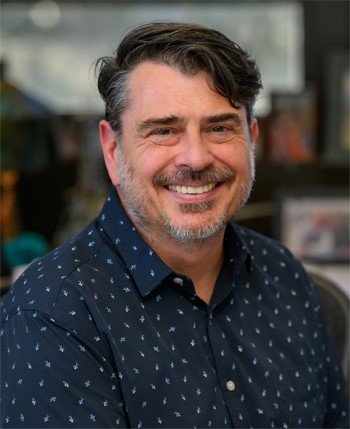
Professor Mark Drumbl is class of 1975 Alumni Professor and Director, Transnational Law Institute, at Washington and Lee University. His work has been relied upon by national and international courts; he has served as defense lawyer in genocide trials; and has been an expert on international terrorism and with the UN regarding racist hate speech. He published Atrocity, Punishment, and International Law (Cambridge 2007), Reimagining Child Soldiers in International Law and Policy (Oxford 2012), and Informers Up Close: Stories from Communist Prague (Oxford 2024, with Barbora Holá).
Chair
Professor Luke Moffett, School of Law, Queen's University Belfast
Professor Luke Moffett is chair of Human Rights and International Humanitarian Law at Queen's University Belfast. His research focuses on victims' rights, reparations, civilian harm, and the increasing algorithmic turn in armed conflict. He has conducted fieldwork in over a dozen conflict/post-conflict societies and worked with different victim groups in advocating and litigating for redress. He is author of Justice for Victims before the International Criminal Court (Routledge 2014), Reparations and War (OUP 2023), and Algorithms of War (BUP 2026).
Organised in partnership with: