Burkitt Medal for Biblical Studies
2025 winner: Professor Carol A. Newsom
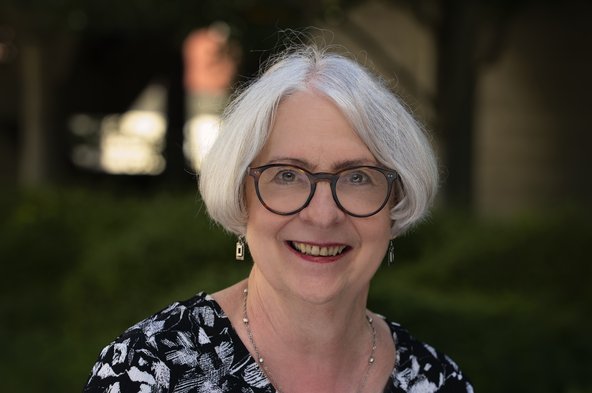
Professor Carol A. Newsom is awarded the 2025 Burkitt Medal for distinguished contribution to the study of the Dead Sea Scrolls (particularly the Songs of the Sabbath Sacrifice), to ancient Hebrew Wisdom Literature, and to Apocalyptic. Her approach has been innovative, involving insights from psychology, the social sciences, and (in her Job books in particular) from Bakhtin.
She is a native of Birmingham, Alabama, where she attended the public schools and Birmingham-Southern College, graduating 'summa cum laude' in 1971. She continued her graduate education at Harvard Divinity School (Masters in Theological Studies,1975) and Harvard University (Department of Near Eastern Languages and Civilizations, Ph.D., 1982).
She has been awarded three honorary doctorates, including one from the University of Copenhagen (2009). In 2011 she served as the President of the Society of Biblical Literature and in 2016 was elected to membership in the American Academy of Arts and Sciences.
Professor Newsom taught Hebrew Bible at the Candler School of Theology and the Graduate Division of Religion at Emory University from 1980 until her retirement in 2019 as the Charles Howard Candler Professor Emerita of Old Testament. She directed thirty dissertations in the Graduate Division of Religion.
She has been a member of the international team of editors of the Dead Sea Scrolls since the 1980s, editing and translating the Songs of the Sabbath Sacrifice, the Apocryphon of Joshua, and other texts.
Her commentary on the Hodayot for the Oxford Commentaries on the Dead Sea Scrolls series will appear in 2026. Her work on the Dead Sea Scrolls also includes the monograph, 'The Self as Symbolic Space: Constructing Identity and Community in the Dead Sea Scrolls' (Brill, 2004; SBL, 2007). The issues explored in this work were broadened and expanded to a wider range of Jewish texts in 'The Spirit Within Me: Self and Agency in Ancient Israel and Second Temple Judaism' (Yale University Press, 2021).
Her related interest in Jewish apocalyptic is reflected in her commentary on the book of Daniel (Old Testament Library, 2014). She is also a scholar of the wisdom literature, having published a commentary on the book of Job (New Interpreter’s Bible Commentary series, 1996) and a monograph, 'The Book of Job: A Contest of Moral Imaginations' (Oxford University Press, 2003).
She has also been concerned with the ways in which women are portrayed in the Bible and the ways in which the Bible has come to be interpreted by women. She is co-editor with Sharon Ringe and Jacqueline Lapsley of the Women’s Bible Commentary, which has sold over 100,000 copies. A revised and expanded twentieth anniversary edition of the Women's Bible Commentary was published in 2012.
"To say that I was astonished at receiving the news of the Burkitt Medal is an understatement. It is an incomparable honour. It made me reflect with gratitude and humility on the great gift my mentor John Strugnell gave me when he entrusted me with the publication of the Songs of the Sabbath Sacrifice for my dissertation, a great privilege for someone so young in her career.
"Following that project, I decided to try to combine the philological rigor of Hebrew Bible studies the socio-rhetorical insights of Mikhail Bakhtin and the emerging approaches to self and agency being developed in cultural anthropology. I realised that the effort was risky and might be misunderstood or rejected by my peers. That my life's work has been recognized by the Burkitt Medal assures me that it was a risk worth taking."
- Carol Newsom, August 2025
Previous winners
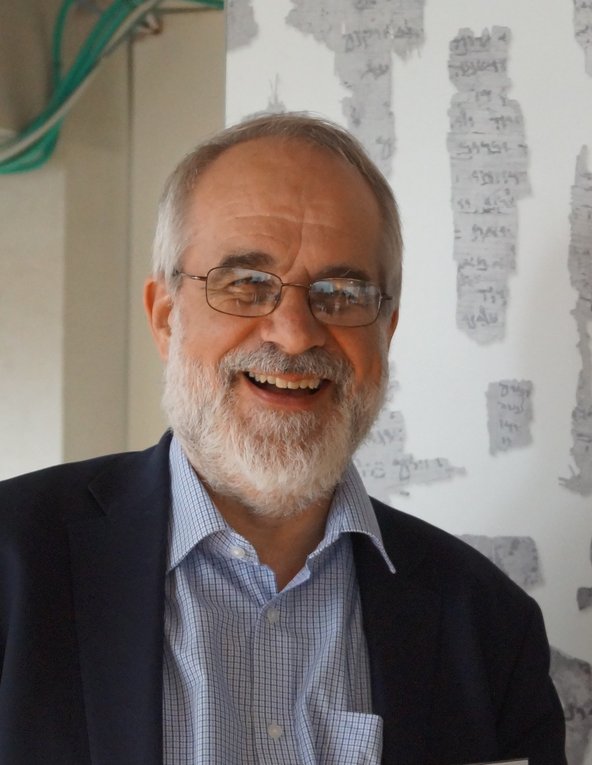
History of the prize
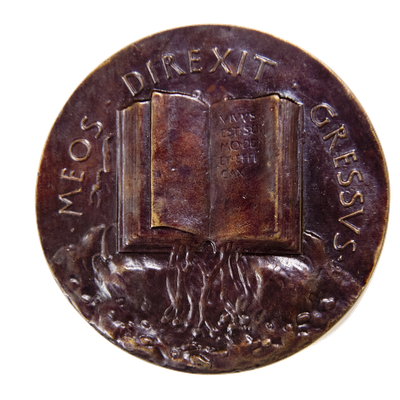
The award was established in 1923 following the decision of Professor Francis Crawford Burkitt (1864–1935), elected a Fellow of the Academy in 1905, to strike a number of bronze medals for presentation by the Academy to scholars of biblical studies. After his death in 1935 the awards became known as Burkitt Medals. The medal was first awarded in 1925.