Case study: "I am proud to have begun putting radical, working-class, Black British history into theatres and classrooms"
By Dr Ryan Hanley
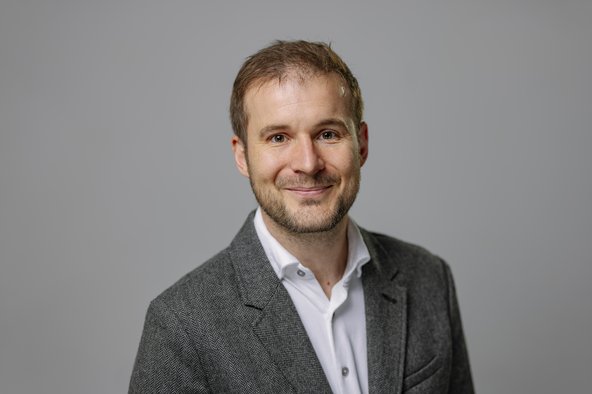
Lead researcher profile
Dr Ryan Hanley is a historian of race and slavery in modern Britain and is Senior Lecturer in Modern British History at the University of Exeter.
He has particular interests in the contributions and perspectives of people of African descent and the intersection of race and class, from the mid-eighteenth to the mid-nineteenth century.
He has published on black intellectuals, cultures of slavery and abolition, and early examples of racial populism in Britain.
Ryan was awarded a PhD at the Wilberforce Institute for the study of Slavery and Emancipation at the University of Hull in 2015.
Postdoctoral Fellowship as a stepping stone to an academic career
Whilst undertaking research as Salvesen Junior Fellow at New College, Oxford in 2017, I applied for and won a British Academy Postdoctoral Fellowship which I took up at University College London.
This was to work on the relationship between the working class-driven reform movement and the abolitionist movement, between the 1780s and 1830s, which were both dealing with questions around labour and freedom but diverged right at the time that abolition was being achieved, with many working class radicals not supporting abolition.
During the Fellowship, in 2019, I was offered a lectureship at the University of Exeter, where I completed the award (including an extension as result of the COVID-19 pandemic):
The prestige and networks that come with the Fellowship enabled me to build a more compelling CV that ultimately landed me my first academic job.
"I was struggling to find the right home for my research [within UK academia], and what I needed to establish myself was space, independence and support.
The flexibility and freedom of the scheme allowed me to pursue the high-level research that established my name in the field.
The prestige and networks that come with the Fellowship enabled me to build a more compelling CV that ultimately landed me my first academic job."
I was subsequently promoted to Senior Lecturer and remain at the University of Exeter. Having published extensively, with two books and more than 20 chapters and journal articles, I'm pleased to have had great critical success as a result.
Building on the Fellowship to achieve broader recognition
I'm honoured to be one of only two historians to have been awarded both the Alexander Prize and the Whitfield Book Prize from the Royal Historical Society.
I won the former for the article 'Calvinism, Proslavery and James Albert Ukawsaw Gronniosaw' which investigated how Gronniosaw could advocate for slavery in his autobiography despite being a formerly enslaved author.
My subsequent 2019 book on pre-abolition Black British writing 'Beyond Slavery and Abolition: Black British Writing, c. 1770–1830' (Cambridge University Press) won the Whitfield Book Prize.
In 2023, I was awarded a Philip Leverhulme Prize which recognises my career contributions to Black British History and the history of race and slavery in 18th and 19th century Britain to date.
"It is an unusual award, in that it is made to early career scholars in recognition of past achievements (including my Postdoctoral Fellowship) and potential for future contributions to scholarship.
I am currently using the award to prepare a new, global history of British anti-slavery activism since 1787, contracted for future publication with Oxford University Press."
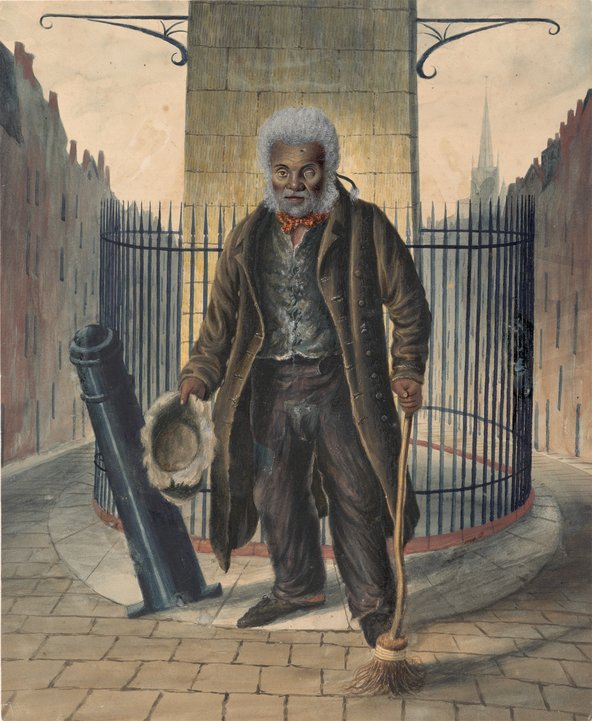
My research looking at the relationship between the abolition debates and the emergence of working-class identities in Britain has continued in my latest book, 'Robert Wedderburn: British Insurrectionary, Jamaican Abolitionist', published in 2024 by Yale University Press.
It was recently featured in BBC History magazine and reviewed by the London Review of Books.
This book began as an incidental discovery during my Postdoctoral Fellowship: a series of newspaper articles containing new information about the Black British working-class radical and abolitionist Robert Wedderburn.
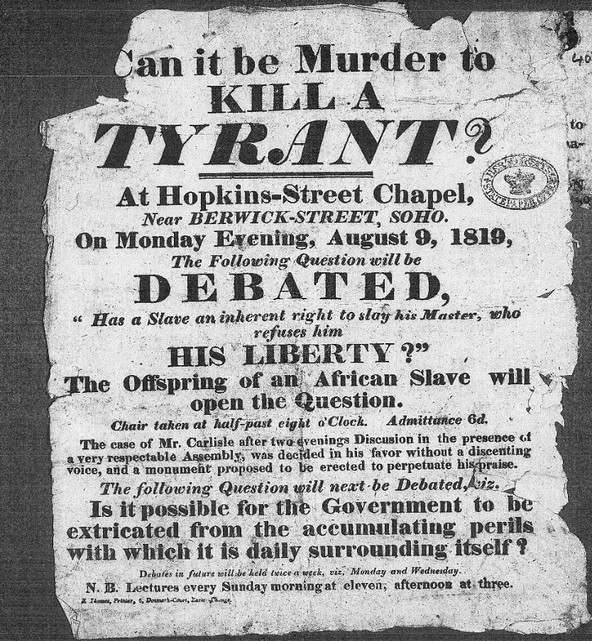
I had written about Wedderburn in my first monograph, but during the Fellowship it quickly became clear that I had now discovered enough new material for the first ever full-length biography of this figure of exceptional historical interest.
Wedderburn was such a charismatic figure that I was certain this biography would work as a crossover book, reaching out to a wider audience beyond academia while presenting brand new research. I am extremely proud of it.
During my career, I've held Visiting Fellowships at Queen Mary University of London, and the Huntingdon Library in California, and was one of the inaugural Lapidus-OI Fellows at the Omohundro Institute in Virginia, USA.
In 2022 I also became the youngest scholar to give the prestigious Nathan I. Huggins Lectures at Harvard University, usually given by Emeritus Professors or other very well-established scholars and public intellectuals, including several Pulitzer Prize winners.
[The lectures were] based on my Postdoctoral Fellowship research; this was a tremendous honour and resulted in me making several new contacts with world-leading scholars in the field of slavery history, both at Harvard and around the world.
They formed the basis for my book on Wedderburn, and lay the foundations for current collaborations with colleagues in Denmark, Ireland, and the US.
Bringing the world of Academia to the public
I enjoy communicating my research to the public and am fortunate to have work featured in BBC History magazine, The Guardian and The Times.
I've also worked with a Black Scottish playwright on a stage play and screen treatment based on my biography of Wedderburn which was brilliant.
Alongside this creative project, in collaboration with the Edinburgh Caribbean Association, I produced short TikTok-style videos for use in classrooms, presenting research on Wedderburn and his extraordinary life in a completely new way.
Working with colleagues in the creative industries has been a revelation, bringing my passion for Black British history into conversation with an entirely different style of expressing stories about the past.
"I am proud to have begun putting radical, working-class, Black British history into theatres and classrooms."
I also work professionally to promote equity and justice in higher education, and decolonising approaches to pedagogy and research in History. I've served as Exeter’s Academic Lead for Student Support (Race Equality and Inclusion) for his department, as Widening Participation Officer and as Chair of the Decolonising History working group.
The Postdoctoral Fellowship has been pivotal to developing my career, enabling me to follow my interests and the time to produce outputs for varying audiences which have resulted in a widening profile:
I owe the British Academy's Postdoctoral Fellowship scheme my career. The Fellowship was essential to my career development. Without it I would not still be in academia.
What I was trying to produce was a potentially unpopular reassessment of a national point of pride – it was something I needed room and trust to be able to deliver. I couldn’t have done that under any other scheme.
"I owe the British Academy's Postdoctoral Fellowship scheme my career. The Fellowship was essential to my career development. Without it I would not still be in academia."
Programme: Postdoctoral Fellowship 2017
Project title: Abolition and Political Radicalism in Britain, 1787-1838
Award dates: 2017 – 2021