Case study: "10 years later, I look back at the Postdoctoral Fellowship as a key moment in my career"
By Mette High
Researcher profile
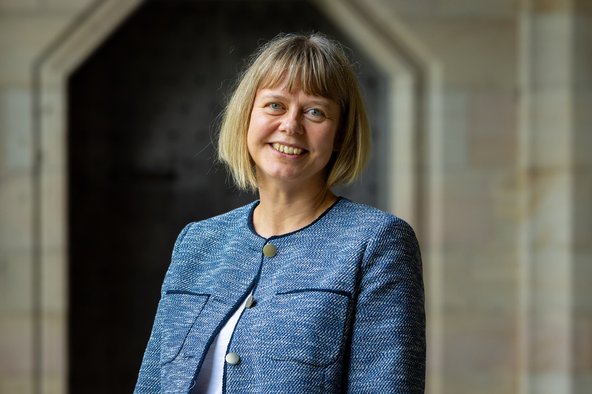
Mette High is a Professor in Social Anthropology at the University of St Andrews. Her research focuses on questions of ethics and economic life, especially in the energy industries. She seeks to understand how people in these industries make financial and ethical valuations of natural resources.
She is also the founding Director of the Centre for Energy Ethics at St Andrews, a privately funded research centre.
Using the Postdoctoral Fellowship to broaden the scope from traditional research topics
I started a research position at the London School of Economics and in 2009 obtained a British Academy Postdoctoral Fellowship to study the involvement of Buddhist monks in the Mongolian gold rush.
In this I carried out ethnographic fieldwork in monasteries near mining camps, examining the institutionalisation of religious practice and self-transformational ethics in the context of a booming gold mining industry and drastic political reform.
The Postdoctoral Fellowship gave me the time, space, support and network to achieve so much more than I otherwise would have been able to achieve.
At the time, scholarships on Mongolia, and Inner Asia more generally, focused on quite traditional topics such as kinship, shamanism, ethnicity, and nationalism.
"I offered a new and different approach, demonstrating how long-term fieldwork is generative of regionally and theoretically nuanced insights that can push forward scholarly debates.
The Postdoctoral Fellowship gave me the time, space, support and network to achieve so much more than I otherwise would have been able to achieve."
That work led to my 2017 book 'Fear and Fortune: Spirit Worlds and Emerging Economies in the Mongolian Gold Rush' (Cornell University Press), a finalist for the Society for Economic Anthropology's Book Prize (awarded to the best book in economic anthropology published in the previous three years).
Towards the end of the Fellowship I chose to relocate to Scotland, taking a position at the University of Edinburgh in Social Anthropology and then won a Leverhulme Trust Early Career Fellowship, with which I transferred to the University of St Andrews in 2014.
Building on my interest in ethical sensibilities and economic transformations in resource extraction, I examined how oil and gas company workers in Colorado, USA, perceived risks and opportunities. This involved fieldwork with on-site crew and executives in company headquarters, taking me into topics such as commodity markets, global finance, calculation and risk.
The 2022 article on this in the esteemed journal 'Cultural Anthropology' was described as "absolutely compelling" – again breaking away from established scholarship by focusing on rarely studied demographics (people working in oil and gas, and in private equity finance) and bringing together usually siloed areas of scholarship.
Postdoctoral Fellowship – a catalyst to successful academic career
Since then have been fortunate to hold Lecturer, Reader – and since 2024 – Professor positions at St Andrews. In 2021 she was a finalist for the 2021 'Falling Walls Science Breakthrough of the Year' prize, in recognition of how her research was instrumental in establishing energy ethics as a research agenda.
This led to me founding the Centre for Energy Ethics (CEE) in 2021 – a research centre at the University, funded by private donors, that challenges disciplinary silos in the study of energy practices and demands a nuanced analytical perspective that transcends the current hyper-politicisation of energy.
The centre now has a staff of 10 and more than 100 researchers, as well as several thousand newsletter subscribers and a very active events calendar, grant schemes and visiting scholars.
I'm proud of my ability to bring people together around a clear ethos (the CEE is all about interdisciplinarity, collaboration, inclusivity and creativity), bringing them onboard and getting them just as excited about the CEE as I am.
"It has been a real pleasure to build a great team and research environment. The Centre offers a creative and dynamic research environment in which to push debates further and ask new questions in order to create a better energy future for us all."
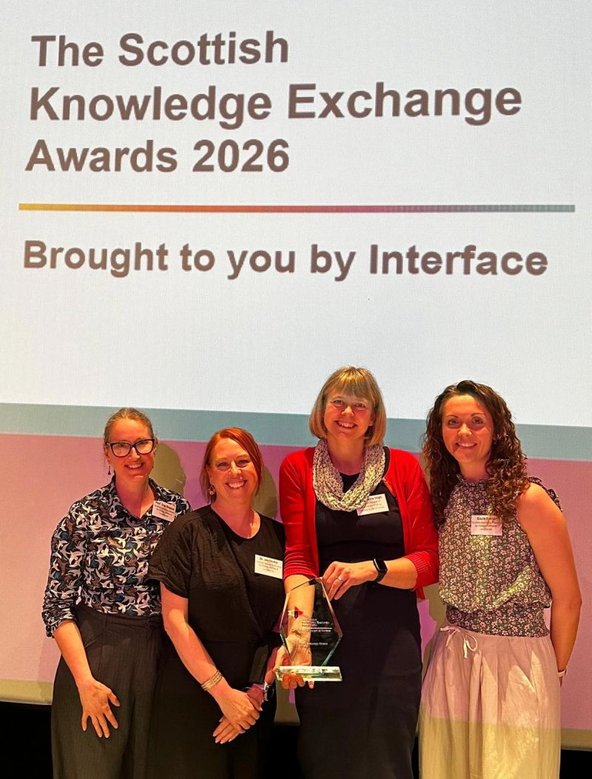
I'm also involved in the Scottish Research Alliance for Energy, Homes and Livelihoods, a Scottish Funding Council-funded consortium focused on an equitable and sustainable net zero future for Scotland.
It brings together all Scotland’s universities with business, industry, government and community organisations to accelerate Scotland's interdisciplinary research capacity.
I'm proud to be able to frequently contribute evidence to policy-making at a UK and Scotland level on matters related to energy and climate change, included giving evidence in the House of Commons and providing scrutiny in Holyrood of the Scottish Government’s draft Climate Change Plan.
I also acted as an Expert Advisor to the Government Office for Science on the UK Net Zero strategy. I was honoured to take up this position and it offered exciting insights into the workings of government, strategy planning, public consultation, and engagement with research.
Underlying all my research projects, where money, metals and energy travel far beyond national borders, is my ongoing desire to understand how global economic processes intersect with intimate moral views, and I am currently working on my third book which is about the US oil and gas industry.
Beyond academic publications, I've also explored these topics in collaborations with artists and film makers as well as in my roles as co-Chair for Research on the Environmental Sustainability Board, a screening committee member of the St Andrews Prize for the Environment, and as Member and Chair of Advisory Boards for research projects in the UK and internationally.
I'm deeply grateful to the British Academy for the opportunity it provided and even now, more than 10 years later,
I look back at the Postdoctoral Fellowship period as a key moment in my career that provided that crucial stepping stone for a wonderful research career.
I would like to thank the British Academy for the opportunity and support it provided at that early stage in my career. It was fundamental in my onward career journey.
"I look back at the Postdoctoral Fellowship period as a key moment in my career that provided that crucial stepping stone for a wonderful research career."
Programme: Postdoctoral Fellowship 2009
Project title: In Pursuit of Legitimacy - Religion and Economic Change in Post-Socialist Mongolia
Award dates: 2009 - 2012