Professor Shalom Lappin FBA
Computational learning theory and machine learning applied to grammar induction and natural language processing, computational and formal semantics, and computational modeling of cognitive processes
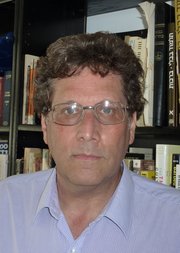
- Fellow type
- UK Fellow
- Year elected
- 2010
- Subjects
- Linguistics
- Sections
- Linguistics and Philology
Summary
My area of research is computational linguistics. My current work focuses on the application of probabilistic methods and machine learning to problems in syntax, semantics, and language acquisition.
Current post
Queen Mary, University of London Professor of Natural Language Processing in the School of Electronic Engineering and Computer Science
King’s College London Emeritus Professor of Computational Linguistics, Informatics
Publications
Other Fellows of the British Academy
Professor Simon Kirby FBA
The origins and evolution of language; the interactions between individual cognition, cultural transmission and biological evolution in human populations; art / science collaboration


Professor Adam Ledgeway FBA
The comparative history and morphosyntax of the Romance languages; Italian and Romance dialectology; Latin; Italo-Greek; syntactic theory, linguistic change and language contact