Professor Susan Rankin FBA

- Fellow type
- UK Fellow
- Year elected
- 2009
- Subjects
- Medieval studies, Music
- Sections
- Medieval Studies , History of Art and Music
Summary
Susan Rankin is Professor of Medieval Music at the University of Cambridge and a Fellow of Emmanuel College. Her research interests lie in three directions: the manuscript transmission and forms of writing of music in the early middle ages, early medieval polyphony and ritual expressed in music throughout the middle ages. Her most recent major publication, from 2018, is a monograph on the music scripts and notations invented by the Carolingians, Writing Sound in Carolingian Europe, and she has recently finished a second Carolingian book, Sounding the Word of God: Carolingian Books for Singers, based on the Conway lectures delivered at the University of Notre Dame Indiana in 2017. From 2019-2020 she was a Fellow of the Radcliffe Institute at Harvard University, working with Margot Fassler towards a book in which dramatic modes of action in and alongside the medieval liturgy are examined. She was awarded the Dent Medal in 1995 and is a Corresponding Fellow of the Medieval Academy of America and Corresponding Member of the American Musicological Society.
Current post
University of Cambridge Professor of Medieval Music
Past appointments
Henry Bradshaw Society Chair of Council
Emmanuel College University of Cambridge Professor of Medieval Music, Fellow
British Academy appointments
Chair of the History of Art and Music Committee
Member of Medieval Studies Committee
Publications
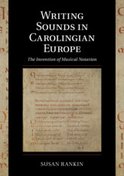
Writing Sounds in Carolingian Europe: The Invention of Musical Notation
Susan Rankin - Published in 2018 by Cambridge University Press
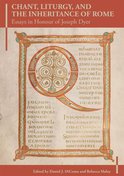
"Singing the Psalter in the Early Middle Ages" in Chant, Liturgy, and the Inheritance of Rome: Essays in Honour of Joseph Dyer
Edited by Daniel DiCenso and Rebecca Maloy - Published in 2017 by Woodbridge
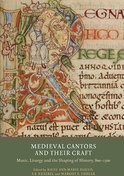
"Notker bibliothecarius" in Medieval Cantors and their Craft. Music, Liturgy, and the Shaping of History (800-1500)
Edited by Katie Buygis, A. B. Kraebel and Margot Fassler - Published in 2016 by York Medieval Press with Boydell and Brewer
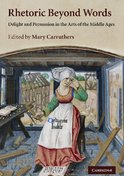
"Terribilis est locus iste: The Pantheon in 609" in Rhetoric beyond Words. Delight and Persuasion in the Arts of the Middle Ages
Edited by Mary Carruthers - Published in 2010 by Cambridge University Press
"The Winchester Troper, Introduction and Facsimile" in Early English Church Music 50
Susan Rankin - Published in 2007 by Stainer and Bell
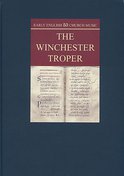
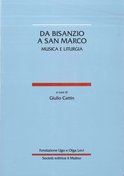
"From Liturgical Ceremony to Public Ritual: Quem queritis at St Mark's, Venice", in Da Bisanzio a San Marco. Musica e Liturgia
Edited by G. Cattin - Published in 1997 by Venice
Other Fellows of the British Academy

Professor Jeremy Lawrance FBA
The medieval & Renaissance literature & history of Spain from 1200 to 1700, with special interests in literacy, libraries & the history of ideas; humanism; imperialism

Professor Ian N. Wood FBA
Religious and cultural history of Late Antiquity and the Early Middle Ages