Professor Nandini Das FBA
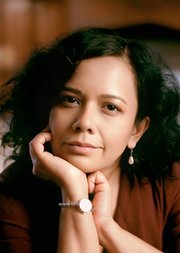
- Fellow type
- UK Fellow
- Year elected
- 2026
- Honours
- FBA
- Subjects
- Literature
Summary
Nandini Das is Professor of Early Modern Literature and Culture at the University of Oxford and Fellow of Exeter College. Her research explores literature, travel, migration, and cross-cultural encounters, with a particular focus on the global dimensions of early modern England. She has published widely on subjects ranging from major writers including Philip Sidney, Shakespeare, and Cervantes to the histories of travellers, diplomats, merchants, and migrants whose lives illuminate the making of the early modern world.
Her publications include 'Renaissance Romance: The Transformation of English Prose Fiction, 1570–1620' (2011), 'The Cambridge History of Travel Writing' (2019, co-edited with Tim Youngs), and, as director of the European Research Council-funded TIDE project, the collaborative volumes 'Keywords of Identity and Lives in Transit'. Her book 'Courting India: England, Mughal India, and the Origins of Empire' (2023) received the British Academy Book Prize for Global Cultural Understanding and was also named Book of the Year by The Spectator, Prospect, and History Today.
Her most recent book, 'This Little World' (2026), reinterprets Tudor and Stuart England through the experiences of those moving into and out of the country, tracing the emergence of early modern English ideas of nationhood, national identity, and belonging.
Her research has been supported by the Arts and Humanities Research Council, the Leverhulme Trust, the UK India Education and Research Initiative, and the European Research Council. She is Vice-President of the Hakluyt Society and serves on the UK Committee on Research Integrity, having previously been a founding member of UKRI's Research England Council (2016–2022). She has also contributed to national and international policy and advisory work on research assessment, open access, and research funding. A BBC New Generation Thinker, she regularly presents television and radio programmes based on her research.
Ptoto credit: Francis Augusto