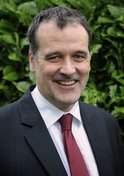
Professor Manuel Barcia FBA
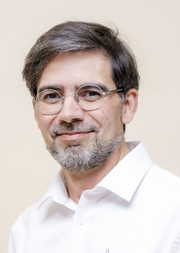
- Fellow type
- UK Fellow
- Year elected
- 2026
- Sections
- Early Modern History to 1850
Summary
Professor Manuel Barcia (born 1972, Havana) is a world-leading, award-winning historian of Atlantic and Global History, specialising in slavery, resistance, and global imperialism. He completed his undergraduate studies (Licenciatura) in History in 1998 at the University of Havana while working full-time as a stone mason and mural painting preserver in Colonial Old Havana, later earning an MA in Interdisciplinary Studies at the same institution.
After pursuing postgraduate studies in Dakar and Rio de Janeiro via international scholarships, he received a British Chevening Scholarship to complete an MA in Comparative History (with Distinction) followed by a PhD in History at the University of Essex (2005).
Professor Barcia spent nearly 19 years at the University of Leeds, where he advanced from a Lecturer to the Chair of Global History, and served in major senior leadership roles including Dean for Global Engagement. In 2025, he joined the University of Bath as Professor of Atlantic Studies and Pro-Vice-Chancellor (Global Engagement), where he leads the institution’s international strategy, global partnerships, and international student recruitment.
To date, he has authored 5 major books and co-authored another one. He is an elected Fellow of the Royal Historical Society and has provided commentary and op-ed pieces for global outlets like The Washington Post, The Independent, Al Jazeera English, and The Times Higher Education.
Current post
University of Bath Pro-Vice-Chancellor for Global Engagement
University of Bath Professor of Atlantic Studies
Previous post
University of Leeds Chair of Global History
Major publications
Professional service & affiliations
Editorial Roles
Editor of Atlantic Studies: Global Currents (2012–2022); Editorial Board member for Slavery & Abolition, Global Nineteenth Century Studies, and the Journal of Global Slavery.
Affiliated Memberships
Gilder Lehrman Center (Yale); Hutchins Center for African and African American Research (Harvard); Wilberforce Institute for the Study of Slavery and Emancipation (Hull); and the Centre for Global History (Edinburgh).
Other Fellows of the British Academy
Professor David A. Bell FBA
The history of the late-18th and early-19th century "Age of Revolution", with a particular emphasis on political culture and the French Revolution
Professor Michael Braddick FBA
History Early Modern History Early modern state formation; the English civil war; the origins of the British empire. Western Europe