Professor Hasok Chang FBA
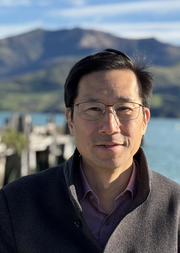
- Fellow type
- UK Fellow
- Year elected
- 2025
- Honours
- FBA
- Sections
- Philosophy
Summary
Hasok Chang has been the Hans Rausing Professor of History and Philosophy of Science at the University of Cambridge, and a Fellow of Clare Hall, since 2010. Prior to that he taught at University College London for 15 years. Born and raised in South Korea, he received his higher education in the United States, gaining a BS in Independent Studies at California Institute of Technology (Caltech) in 1989 and a PhD in Philosophy at Stanford University in 1993. His education also owes a great deal to his teachers at Northfield Mount Hermon School, Hampshire College, and Harvard University.
Chang’s research combines the history of chemistry and physics with general philosophy of science, and he envisages his work in the history and philosophy of science as ‘complementary science’, which addresses scientific questions neglected by specialist scientists.
He is the author of Inventing Temperature: Measurement and Scientific Progress (Oxford University Press, 2004), joint winner of the 2006 Lakatos Award; Is Water H2O? Evidence, Realism and Pluralism (Springer, 2012), winner of the 2013 Fernando Gil International Prize; and Realism for Realistic People: A New Pragmatist Philosophy of Science (Cambridge University Press, 2022). He is also co-editor (with Catherine Jackson) of An Element of Controversy: The Life of Chlorine in Science, Medicine, Technology and War (British Society for the History of Science, 2007), a collection of original work by undergraduate students at University College London. From 2017 to 2020 he held a Wolfson Research Professorship from the British Academy.
Intellectual work and community-building go hand-in-hand for Chang. He is a co-founder of the Society for Philosophy of Science in Practice (SPSP), and the Committee for Integrated History and Philosophy of Science. He has served as the President of the British Society for the History of Science from 2012 to 2014, and in various roles for the Philosophy of Science Association, and the International Union of History and Philosophy of Science and Technology.