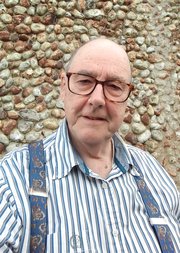
Professor Callum G Brown FBA
- Fellow type
- UK Fellow
- Year elected
- 2025
- Honours
- FBA, FRSE
Summary
Callum Brown has studied the decline of religion for 50 years, principally in Britain, Canada, and the United States. After focusing for 25 years rather fruitlessly on the 19th-century, he reconceptualised secularisation in five new ways in the mid 20th-century. He wrote a book on each. The five ways are:
First, secularisation as the collapse of hegemonic discursive Christian culture triggered by the end of conventional female piety, broached in The Death of Christian Britain (2000).
Second, secularisation as a demographic transition toward ultra-low fertility and female economic empowerment, statistised in Religion and the Demographic Revolution (2012).
Third, secularisation as the recrafting of the self, studied through oral history in Becoming Atheist (2017).
Fourth, secularisation in the struggle between conservatives and liberals in the 1960s, considered in The Battle for Christian Britain (2019).
Fifth, secularisation as ethical change during 1930-80 in an ‘Open Conspiracy’ of leading intellectuals led by H.G. Wells, examined in Ninety Humanists and the Ethical Transition of Britain (2025).
Brown mixes approaches to broaden the understanding of culture change in 'The Humanist Movement in Modern Britain' (with D. Nash and C. Lynch) (2023), and in shorter studies like ‘The Curse: film and the churches in the Western Isles 1945 to 1980’ (with Ealasaid Munro), Northern Scotland v.11 (2020), pp 60-79; and ‘The Unholy Mrs Knight” and the BBC: secular humanism and the threat to the Christian nation c.1945-1960’, English Historical Review v.127 (2012), pp 345-76.