Professor Joanna Page FBA
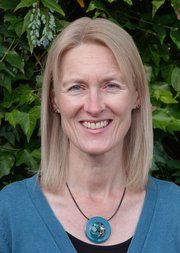
- Fellow type
- UK Fellow
- Year elected
- 2025
- Subjects
- Literature, Modern languages
- Website
- https://www.mmll.cam.ac.uk/jep29
Summary
Joanna Page is Professor of Latin American Studies at the University of Cambridge and Director of CRASSH, the University’s Centre for Research in the Arts, Social Sciences and Humanities. She directed the Centre of Latin American Studies at Cambridge between 2014 and 2018 and has been a Fellow of Robinson College since 2002.
Joanna Page has published widely on Latin American literature, cinema, graphic fiction, and visual arts. Much of her research career has been dedicated to exploring different facets of the relationship between science and culture in Latin America, including literature that interrogates scientific rationalism and Latin America’s position within global histories of science; the evolution of science fiction in the region; colonial, neocolonial and decolonial imaginaries of science and technology; the relationship between Western scientific knowledge and indigenous knowledge; and transdisciplinary collaborations between artists and scientists, particularly in the realms of natural history and environmental science. She has also worked on questions of memory, modernity, capitalism, posthumanism, new materialism, and political ecology in Latin America, and has broader interests in marine conservation.
She has a long-standing commitment to open research, with five of her six monographs published in open-access digital formats.