- Venue
- The British Academy, 10-11 Carlton House Terrace, London, SW1Y 5AH
- Price
- Free
- Facilities
- Baby changing facilities, Hearing loop, Live subtitling, Online and in person, Wheelchair accessible venue
- Event series
- Searching for wellness
From the Big Stink and Bazalgette’s engineering feats to the infamous fatberg, the sewage pollution scandal, and the new super sewer — London's history is interwoven with what (and how) we flush away. Sewers are one of the most transformational interventions to human health in history, yet they are rarely understood or recognised for their impact.
Join historian Professor Rosemary Ashton FBA, architectural theoretician Dr Paul Dobraszczyk, and prominent pollution activist Professor Peter Hammond as they reveal the captivating secrets of the systems that flow beneath us. Uncover the connections between Victorian engineering feats, London’s social history, and the politics of public health, and leave with a new appreciation for your toilet.
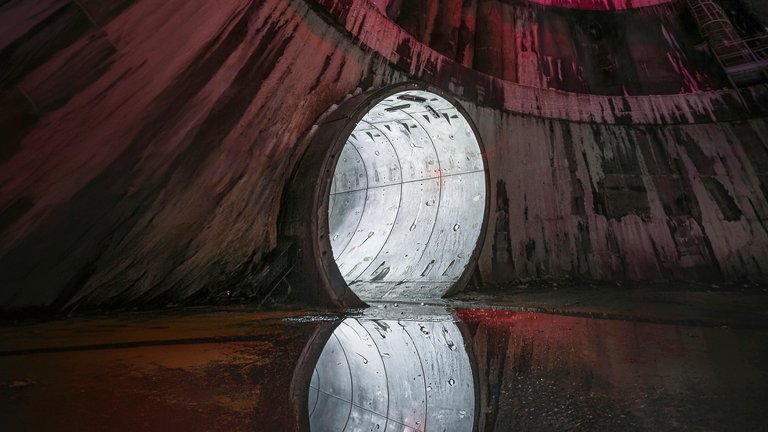
Alongside the discussion, explore London’s own ‘Cathedral of Sewage’, Crossness Pumping Station, through an immersive exhibition.
Speakers
Professor Rosemary Ashton FBA
Rosemary Ashton FBA is Emerita Quain Professor of English Language and Literature at University College London, and a leading historian of Victorian Britain. Her acclaimed book One Hot Summer: Dickens, Darwin, Disraeli, and the Great Stink of 1858 brings vividly to life the sweltering London summer when the city's sewage crisis forced Parliament into action. This work sits alongside her wider body of research into 19th-century London, including 142 Strand and Victorian Bloomsbury, and four critical biographies on George Henry Lewes (1991), Samuel Taylor Coleridge (1996), George Eliot (1996), and Thomas and Jane Carlyle (2002). A Fellow of the Royal Society of Literature and the British Academy, and holder of an OBE, she has shared her expertise on Victorian culture widely, including on BBC and Radio 4's In Our Time.
Dr Paul Dobraszczyk
Paul Dobraszczyk is an architectural writer, photographer, and artist based in Manchester, with a particular focus on architectural theory. He is the author of several books exploring the theoretical relationship between architecture and the natural world, including The Matter of Architecture: Geology, Buildings and Us (Reaktion, 2026), Botanical Architecture (Reaktion, 2024) and Animal Architecture (Reaktion, 2023), alongside Architecture and Anarchism: Building Without Authority (Paul Holberton, 2021), which examines architecture beyond conventional structures of power. He is also a lecturer at the Bartlett School of Architecture, University College London, where he teaches and develops this theoretical work further. Paul is currently completing two further books, on the Peak District and the Victorian architect Charles Henry Driver, both due in 2027. His broader research spans architecture, landscape and cities since the nineteenth century, with recurring interests in ecology, ruins, underground spaces and industrial architecture.
Professor Peter Hammond
Peter Hammond is a retired university academic and campaigner for sewage-free rivers. He was Professor of Computational Biology at University College London’s Institute of Child Health until his retirement in 2015, where he used artificial intelligence and image analysis to detect brain and facial shape differences associated with genetic disorders and prenatal alcohol exposure. From 2015 to 2018, Peter Hammond continued part-time research at the University of Oxford’s Big Data Institute. Since 2016, he has campaigned for sewage-free rivers and seas with WASP (Windrush Against Sewage Pollution), working closely with founder Ash Smith to expose pollution and push for regulatory action. Peter's activism in WASP was recently dramatized in the Channel 4 docudrama, Dirty Business.
Exhibit Information
Crossness Pumping Station
Crossness Pumping Station is one of the world’s great monuments to Victorian engineering and architecture. A Grade I-listed gem, this palace of iron and steam was opened in 1865 to pump south London’s sewage with four mighty beam engines, as part of Joseph Bazalgette’s new sewer network that helped end the city’s sanitation crisis. Celebrated for its magnificent design, Crossness hosted the system’s ceremonial opening, expressing a Victorian conviction that public health, civic ambition and beauty should stand together for the common good. Now an accredited museum, it is being restored to splendour by a team of dedicated volunteers, who safeguard a masterpiece of the age that shaped the modern world.
Further information
Free event, donations welcome, booking required.
Attendees will be invited to see the Crossness Pumping Station exhibition from 18:00, until the talks start at 18:30, and after the talks finish from
This event will be recorded and live streamed via YouTube.
As tickets are free, we release more than the available seats to account for no-shows.
- Entry is first-come, first-served. We recommend arriving early to avoid disappointment.
- A ticket does not guarantee entry to the main event space. If it reaches capacity, you'll be directed to the bar next door to watch a live stream.
This event will have live subtitles delivered by 121 Captions.
See information about the accessibility of the venue.
If you have any questions about this event, please refer to our Public Events FAQs. If your question is not answered, please email [email protected].
Discover more about our upcoming events by signing up for our newsletter.