Sick of It: The Global Fight for Women's Health
By Sophie Harman
2025 shortlisted book
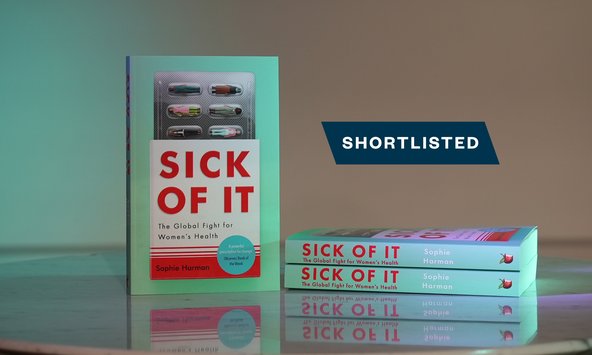
Despite decades of research and funding, women around the world continue to face preventable health risks and deaths. In 'Sick of It', Sophie Harman examines why this crisis persists, showing how women’s health is shaped by politics, policy, and social inequality.
The book explores a wide range of issues — from the repeal of abortion rights and the bombing of Ukrainian maternity hospitals, to less visible problems like healthwashing, the exploitation of vulnerable patients, as well as women health workers.
By examining the intersections of populism, big data, and gendered labour, 'Sick of It' also offers solutions, highlighting the role of activism and political engagement in improving women’s health globally.
About the author
Sophie Harman is a Professor of International Politics at Queen Mary University of London with over fifteen years of experience working on global health politics.
She's worked in Kenya, Sierra Leone, Tanzania, Uganda and Zambia, Geneva and Washington DC, for organisations including UN Women and The Fawcett Society. She's written for The Guardian, Independent, New Statesman, The Conversation, and Tortoise.
In 2019 she was nominated for a BAFTA for outstanding debut by a British writer, director or producer for the narrative feature film she co-wrote and produced, 'Pili'.
The judges on the book
“This is a powerful book, an impassioned plea for more attention for women’s health. These invisible health and social care workers the world over are often underfunded, if funded at all, unprotected and abused.
“Women’s health, says Sophie Harman, has become a branding tool to win power and influence or even ‘healthwash’ an authoritarian regime. Even charities exploit women when using images of the vulnerable to help raise funds. 'Sick of It' is a book that is hard to ignore.”
Interview with Sophie Harman
How do the themes in your book help us address social issues?
I think ‘Sick of It’ helps us address some big social issues, particularly within global politics, whether that be modern conflict and attacks on maternity hospitals, cuts to foreign aid, or the rise of the global far right and changes to the United Nations.
It also addresses everyday social issues. People who work in healthcare and are afraid of violence in their work settings, or people who have caring responsibilities and are really worried about cuts and austerity.
What do you think is the biggest myth about women's health globally?
That it gets no attention or gets no funding. Billions of aid goes to women's health every year. Even when we see cuts to foreign aid, we see women's health being sort of saved. It's the type of attention that really matters, and I really want us to focus on that.
Who most influenced you when researching your book?
If you ever feel depleted or like you've got no hope, talk to some activists.
It could be activists driving women across borders in the US to be able to access abortions. Or activists working in the United Nations, which you don't really think is an activist space, but these are the people who are going to meetings every day trying to fight for women's health in a really inclusive way, being ignored, being gender filibustered.
Why is non-fiction important?
I think non-fiction is more important in 2025 than it has ever been. I wrote the book because I want people to understand how the world works. I want them to understand global politics and women's health. Non-fiction is vital for how we understand the world we live in, to make it better.