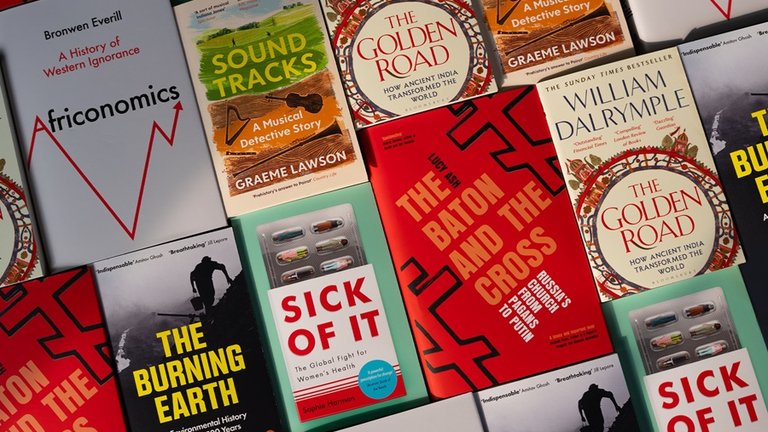
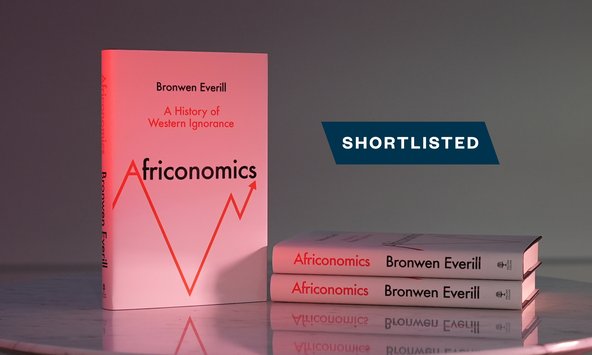
Africonomics: A History of Western Ignorance
By Bronwen Everill
2025 shortlisted book
For centuries, outsiders have tried to “fix” African economies — missionaries, philanthropists, development experts, and NGOs — often with unintended consequences.
In 'Africonomics', historian Bronwen Everill explores why these efforts have repeatedly fallen short.
Bronwen argues that the problem lies in a misguided premise: that African economies should operate more like Western ones. Ignoring Africa’s own economic traditions, Western thinkers applied Western ideas about growth, wealth, debt, unemployment, inflation and women’s work, often measuring success with Western standards that didn’t fit local contexts.
By examining this history, 'Africonomics' challenges long-held misconceptions and highlights Africa’s own approaches to economic life.
The book offers a fresh perspective on how African nations can shape their economies on their own terms, drawing lessons from both the past and present.
About the author
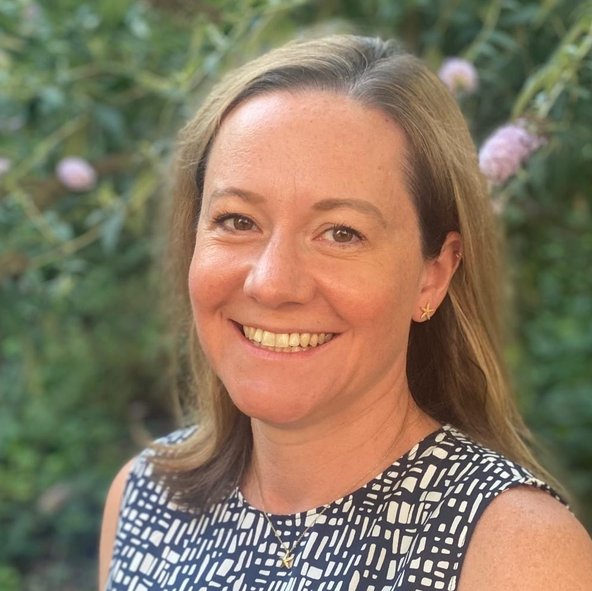
Bronwen Everill is a visiting fellow at the Laboratory for the Economics of Africa’s Past, in the Department of Economics at Stellenbosh University. In August 2024, she joined the faculty of the Princeton Writing Program.
She was a fellow of Gonville and Caius College, University of Cambridge from 2015 and was the Director of Cambridge’s Centre of African Studies.
Her work has explored comparative economic cultures, Anglo-American foreign policy, imperial humanitarianism in Africa, and revolutions in the Atlantic World. Her previous books include 'Not Made by Slaves' and 'Abolition and Empire in Sierra Leone and Liberia'.
The judges on the book
“With the power of incisive analysis, and a beautifully woven, compelling narrative, Bronwen Everill masterfully makes the case that – beginning with the slave trade, continuing through the colonial economy to contemporary development – well-meaning initiatives failed to produce desired outcomes in Africa because of western ignorance.
“Peeling off layers of ignorance chapter by chapter, the book skilfully and convincingly transforms everything we knew about agency in the global economic history centred on relations between Africa, the Atlantic, and Europe. It is only after understanding Africa’s culture, values, and beliefs from within that any well-meaning external solutions can produce desirable outcomes.
“Bronwen overturns conventions to offer fresh insights on African-grounded global history and intercultural dialogue.”
Interview with Bronwen Everill
How do the themes in your book help us address social issues?
People need to think about where the solutions are coming from, that are going to come from the top down, from rich to poor, from those with certain kinds of knowledge to those deemed to be without that kind of knowledge.
We should be looking for social solutions in a variety of places, not always going to the same sources. For example, the spread of mobile banking started on the African continent.
What assumptions were you hoping to challenge?
The idea that Africa doesn't have much of a history. There aren't enough sources, for example, there aren't diaries or state papers of Kings and Queens.
Economic history is one of the best places for understanding the daily lives of people. Collecting different kinds of economic sentiment is reshaping the history of Britain, for instance, and I think that it does similar work on the continent.
Who most influenced you when researching your book?
I ran the African economic history seminar at Cambridge alongside Gareth Austin. We brought in lots of exciting researchers from the continent. Through this, I realised there was a real gap between the kinds of cutting-edge research that were happening on the continent and how people's perceptions of the continent were developing.
Why is non-fiction important?
I think some of the stories in the book are shocking, hilarious and frustrating. If they were fiction, nobody would believe that they had happened.
Non-fiction allows us to sit with discomfort, sit with contradictory impulses and understand that people don't always behave in a predictable way. It can help us to have a little bit less hubris.
2025 shortlist