The Secret Lives of Numbers: A Global History of Mathematics & Its Unsung Trailblazers
Kate Kitagawa and Timothy Revell
2024 shortlisted book
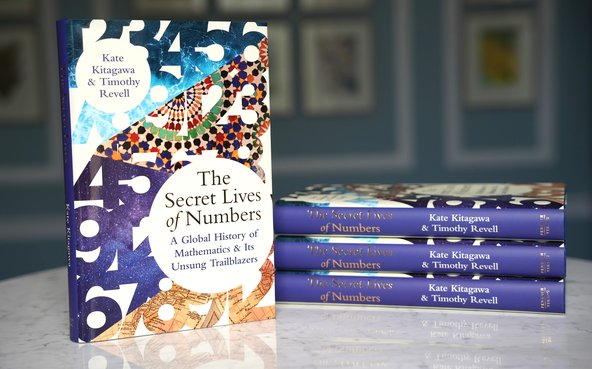
Mathematics shapes almost everything we do. But despite its reputation as the study of fundamental truths, the stories we have been told about it are wrong.
In 'The Secret Lives of Numbers', historian Kate Kitagawa and journalist Timothy Revell introduce readers to the mathematical boundary-smashers who have been erased by history because of their race, gender or nationality.
From the brilliant Arabic scholars of the 9th-century House of Wisdom, and the pioneering African American mathematicians of the 20th century, to the 'lady computers' around the world who revolutionised our knowledge of the night sky, we meet these fascinating trailblazers and see how they contributed to our global knowledge today.
Along the way, the mathematics itself is explained extremely clearly, for example, calculus is described using the authors' home baking as they pose the question: how much cake is in our cake?
This revisionist, completely accessible and radically inclusive history of mathematics is as entertaining as it is important.
About the authors
Dr Kate Kitagawa
Kate is one of the world's leading experts on the history of mathematics. She earned a PhD from Princeton University, taught history at Harvard University and conducted research in the UK, Germany and South Africa.
Her first book was a national bestseller in Japan, and she has been named one of the 100 most influential people in Japan by Nikkei Business.
She is currently Director of the Space Education Office at the Japan Aerospace Exploration Agency (JAXA). Kate lives in Japan.
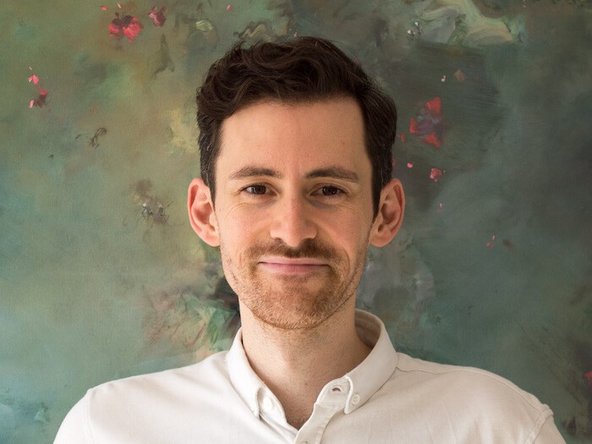
Dr Timothy Revell
Timothy is a journalist and lapsed mathematician. He is currently the Deputy US Editor for the New Scientist. As a reporter and editor, he specialises in technology and mathematics, covering everything from artificial intelligence to the Abel Prize.
He appears regularly on WNYC's 'Science Friday', as well as on other podcasts and radio to talk about the latest developments in science.
He has a master's degree in Mathematics and a PhD in Computer Science. His first book was 'Man vs. Maths'. Tim is based in the UK.
Kate Kitagawa and Timothy Revell interview

The British Academy Book Prize celebrates books that champion global cultural understanding. What does it mean to you to be shortlisted for such a prize?
We are both delighted and honoured to hear that The Secret Lives of Numbers has made the shortlist for the British Academy Book Prize for Global Cultural Understanding. In our book, we present a new history of mathematics, one that puts the global nature of its origins at the centre and tells the stories of those who have often been left out.
Our aim was to showcase how the history of mathematics isn't a straight line starting with the Ancient Greeks and continuing one step at a time until today. It is far more chaotic, disjointed, beautiful, magnificent and of course global than that.
This award – for Global Cultural Understanding – recognises exactly the aims we had for our book and so we couldn't be more proud to be shortlisted.
What was the motivation for writing this book and how does it help readers gain a better understanding of global culture?
The history of mathematics is far more complex, fascinating and global than the way it is often presented.
Our motivation was to show how the origins of mathematics aren't just about a group of ancient Greek men, but also an amazing cast of people and cultures from across the world, ranging from China to South America.
Because of the logical nature of mathematics, we often imagine that its origins should be a straight line, with one development neatly leading on to another – but it is far more interesting than that. Ideas have sprung up all around the world, sometimes to be forgotten and rediscovered, and other times passed between different peoples to live on.
The history of mathematics is beautifully chaotic. We felt it was time for a book to really capture that.
What surprised you the most when researching and writing the book?
Pretty much everything we thought we knew about the origins of mathematics was challenged in one way or another when writing the book.
No subject is immune from bias and mathematics is the same. Some really well-known stories ended up being misrepresentations, presenting facts in such a way to give a distorted view, and others ended up being altogether wrong.
As we worked our way through thousands of years of mathematical history we were constantly surprised by how much we had to alter our own perceptions.
What is one key thought or theme that you hope will stick with readers once they’ve finished the book?
There is no such thing as a complete history, there never can be, but our hope is that this book is a starting point. The origins of mathematics are so different to the usual stories that we tell about it and we want that to change.
We hope that our book helps a more global – and beautifully chaotic – understanding of the history of mathematics to become mainstream.