Divided: Racism, Medicine and Why We Need to Decolonise Healthcare
Annabel Sowemimo
2024 shortlisted book
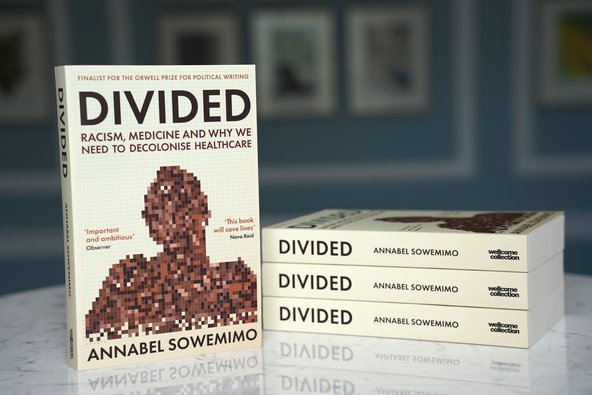
In the wake of the pandemic and with an NHS in crisis, we are all too aware of the urgent health inequalities that plague our world. But these inequalities have always been urgent: modern medicine has a colonial and racist history.
Here, in an essential and searingly truthful account combining data, history and interviews, writer, campaigner and NHS doctor, Annabel Sowemimo unravels the colonial roots of modern medicine.
Tackling systemic racism, hidden histories and healthcare myths, Sowemimo recounts her own experiences as a physician, patient and activist.
'Divided' exposes the racial biases of medicine that affect our everyday lives and provides an illuminating – and incredibly necessary – insight into how our world works, and who it works for.
This book will reshape how we see health and medicine – forever.
About the author
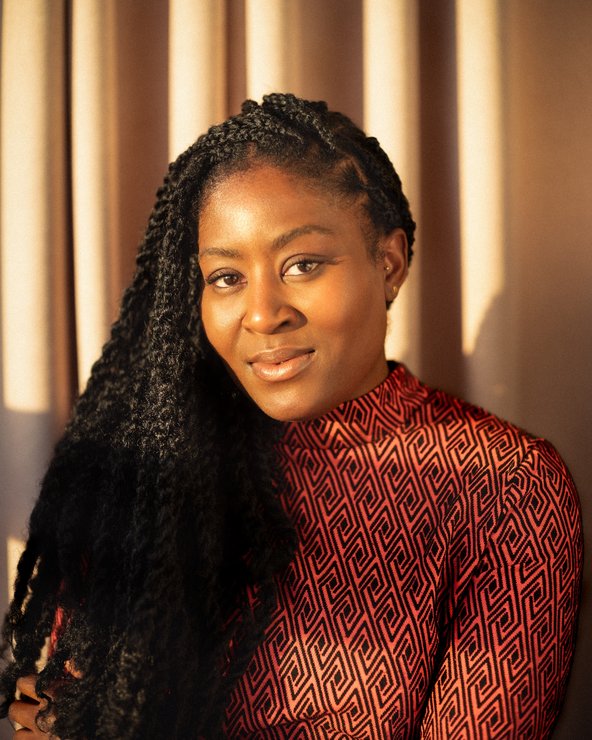
Annabel Sowemimo was born and grew up in London and is a registrar in sexual and reproductive health currently working in a clinic in Leicester.
She also runs the charity Reproductive Justice Initiative which aims to educate and empower specifically BPOC in sexual health matters of all kinds.
She is currently working on a PhD at King’s College London (KCL) and teaches at KCL, University College London (UCL) and the London School of Tropical Medicine as well as speaking on all of these matters in the media.
Annabel Sowemimo interview
The British Academy Book Prize celebrates books that champion global cultural understanding. What does it mean to you to be shortlisted for such a prize?
I am honoured to have made the shortlist for the British Academy Book Prize.
In writing Divided, I sought to create a text that is both accessible and provides fresh perspectives. Making your voice heard can be a constant struggle but there are glimmers of hope that suggest more of us are being listened to.
What was the motivation for writing this book and how does it help readers gain a better understanding of global culture?
Writing Divided felt urgent.
I started writing in 2020 at the height of the COVID-19 pandemic and the global Black Lives Matter protests. I found that much of the mainstream discussion surrounding scientific racism – and how it operates on a global scale – were lacking the depth and precision needed for change to happen.
For us to fully comprehend how racial hierarchies have been used and continue to be weaponised, I needed to tell that story. I was an insider to this story, as a clinician and researcher, but also an outsider, as an activist and a Black woman – a second generation Nigerian-British women.
I want to equip everyone with the knowledge to change the status quo and achieve greater equity. These are complex discussions – how racism continues to operate within the medical sciences healthcare – but they shouldn’t be exclusionary.
I hope that the stories that I draw on and the people I’ve interviewed illustrate that.
What surprised you the most when researching and writing the book?
I am often told that Divided can be a shocking and disturbing read.
I spent so many hours examining archives, research papers and interviewing experts, uncovering racism at the heart of much widely celebrated scientific work.
One of the most shocking moments was reading the original manuscript of Sir Francis Galton’s Kantsaywhere in the collection at UCL: a book he penned about a racist, eugenic utopia.
What is one key thought or theme that you hope will stick with readers once they’ve finished the book?
We must continue to interrogate the notion that evidence-based medicine is objective.
That it isn’t deeply moulded and impacted by the oppression that we see in all other walks of life is a lie. It was drummed into at me at school that if the metanalysis says x, then x is the truest, but what happens when we have rotten scientific foundations?
The idea that medicine is objective and free from bias is a fallacy. The science we have today is shaped by the complex socio-historical context of yesterday.
If we are to achieve greater health equity, then acknowledging this is essential.